The short version
- Case, then box. A hardshell case on its own isn’t packaging. Put it in a sturdy carton with about 2 inches of padding on every side.
- Nothing moves. Fill every gap inside the case and around it, then shake it. If you hear or feel movement, add more padding.
- Protect the neck and headstock, especially on a Gibson. Its angled headstock is the most fragile part of the guitar: keep it still with padding around it, but don’t wedge it.
- Strings and truss rod: opinions split on both. Most packing guides say loosen the strings a little; Taylor says modern guitars don’t need it. Some players also loosen the truss rod, but none of the packing guides here ask you to touch it for a normal trip.
- Cover the value, photograph the packed box, keep the receipt, and if it’s cold, let the guitar warm up in its case before opening it.
Three methods, side by side
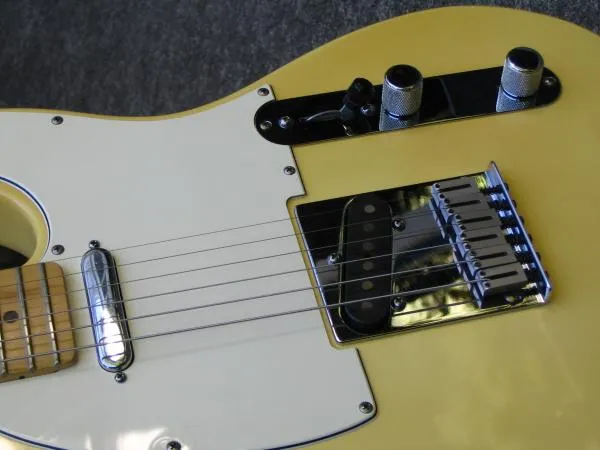
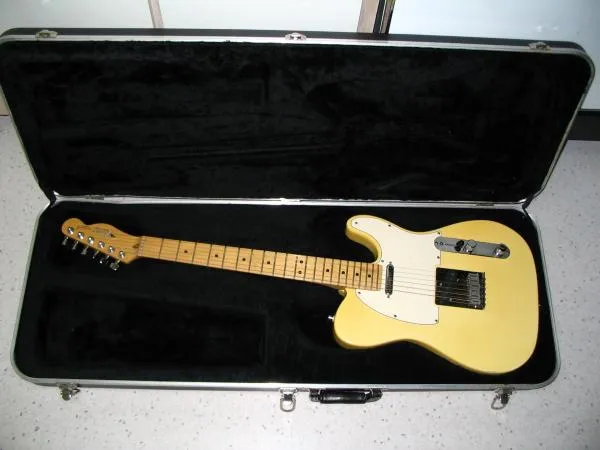
The 1990 Telecaster in the archive was sold in 2005 by a seller who had “shipped several guitars this way without incident.” Chicago Music Exchange (CME), the Chicago vintage dealer, publishes its own step-by-step method for people sending it gear, and Reverb has one for its sellers. They agree on far more than they disagree:
| Step | The 2005 seller | Chicago Music Exchange | Reverb |
|---|---|---|---|
| Strings | “Evenly slackened with a minor amount of tension left on” | Loosen to relieve some tension on the neck | Loosen |
| Inside the case | Extra protection around the body and “especially around the neck” | Craft paper around the body; neck supported, headstock isolated; paper over the fretboard | Paper between strings and fretboard; pad over and around the headstock |
| Loose parts | — | Switch tip, whammy bar into the case compartment | Whammy bar off, wrapped separately |
| Outer box | A guitar shipping carton | Sturdy box, “not too big and not too small” | 2″ of padding all round; under 48″ long |
| Padding | — | Bubble wrap or firm paper around the case; paper in the gaps; no peanuts | Kraft paper best; no newspaper |
| Final check | — | Shake the case, then shake the box | Shake test; pack for a 3-foot drop |
| Carrier | FedEx Ground (or UPS), insured, tracked, signature required | — | Add protection to the label |
Step 1: Strings and truss rod (where the experts disagree)
Ask ten guitarists whether to loosen the strings for shipping, or the truss rod, and you’ll get both answers. Here’s who says what.
Loosen the strings? Mostly yes
Most shipping guides tell you to loosen the strings. Gibson’s own packing guide opens with “loosen the strings to relieve the tension on the neck/headstock.” CME says to “loosen the strings to alleviate some of the tension on the neck,” Reverb lists it as the first step, and FedEx says its Packaging Lab recommends “loosening the tension on the strings to remove the stress on the neck.” The 2005 seller did the same on his luthier’s advice: evenly slackened, with a minor amount of tension left on.
Taylor Guitars disagrees, at least for modern guitars. In its travel advice, Taylor calls slackening “a leftover notion from a bygone era” from before adjustable truss rods, says its own drop tests found a detuned guitar is no better protected from impact, and warns that heavily slackened strings over a long period can let the neck back-bow.
Loosen the truss rod? Usually no
The truss rod is a steel rod inside the neck that pulls against the strings, so the two balance each other. That leads some players to loosen the rod whenever they slacken the strings. Guitar repairer Gerry Hayes of Haze Guitars explains the logic: with the strings slack, the rod is “pulling too hard in the other direction,” so “really, you should slacken the truss rod too.” But he only advises loosening strings and rod for storage of many months or years; for shorter periods he says not to worry. Taylor makes the same balance argument from the other side: modern rods are factory-calibrated to the string tension.
None of the shipping guides here (Gibson, CME, Reverb, FedEx, PRS) ask you to adjust the truss rod for a trip of a few days. If you do turn it, note how far and tell the recipient, because the neck will need setting again on arrival.
A sensible middle path: loosen the strings part way, as the seller, CME and Gibson do, and leave the truss rod alone. Taylor’s and Hayes’s concerns are about strings left heavily slackened for a long time, not a few days in a box. Tune back up when the guitar arrives, and check the neck relief.
While you’re at it, take off anything that can come loose or scratch the finish (whammy bar, switch tip) and stow it in the case compartment. Gibson adds bridges and tailpieces to that list if they’re loose. Lay clean paper between the strings and the fretboard.
Step 2: Inside the case
The aim is a guitar that can’t move inside its case. CME fills the open spaces around the body with craft paper so the guitar is “snug but not stressed,” checks that the neck is fully supported and the headstock isolated, and adds more paper around the neck and headstock if they aren’t. The 2005 seller put extra protection “especially around the neck.” Gibson’s guide sums up the objective: keep “the body, neck and headstock of the instrument stable during transit.”
Then close the case and shake it. CME’s test is simple: “Hear anything? Feel anything? No? Good.” Nothing should move except what’s stowed in the compartment.
Gibson headstocks: handle with extra care
Reverb calls Gibson headstocks “especially fragile,” and repair shops see broken Les Paul and SG headstocks all the time. It isn’t bad luck. Repairers point to several design choices that meet in the same small area just behind the nut:
- A steep back angle. Most Gibson headstocks tilt back roughly 17°. Flat Fender-style headstocks don’t.
- Short grain. The neck and angled headstock are traditionally carved from one piece of mahogany, so the wood grain runs across the angled section instead of along it, which is weak in exactly the direction a fall loads it. Necks with a separate, glued-on (scarf-jointed) headstock don’t have this problem.
- The truss-rod access. The cavity for adjusting the truss rod is routed out of that same spot, removing wood where there’s least to spare.
- Heavy tuners, where fitted, add momentum when the headstock hits something.
Most breaks happen when a guitar falls over, but cases play a part too. Aeonic Frets notes that a case only protects the headstock “if the neck is actually resting in the neck block.” So for any guitar with an angled, one-piece headstock (most Gibsons and similar designs):
- Check the neck is seated in the case’s neck rest before you close it.
- Immobilize the headstock. Gibson recommends packing material behind the headstock, in front of it, and at the neck/body joint.
- But don’t wedge it. Reverb’s warning is about force: tuck crumpled paper around the sides, and don’t jam padding hard underneath the angled headstock, because if the box is dropped a tight wedge can act as a lever and snap the neck.
- Pack for the drop with a well-padded outer box.
Gibson vs Reverb, reconciled: both want a headstock that can’t move. Support it gently behind and in front, as Gibson advises, without forcing a hard block under the angle that it could lever against, as Reverb warns. Snug, not forced.
Step 3: The box
- Always box the case. Reverb says every case needs a padded box around it; a bare case is also more likely to be hit with extra charges. FedEx recommends against shipping a guitar that isn’t in a case at all.
- Leave room for padding. Reverb and PRS both call for about 2 inches of padding on all sides of the case.
- Mind the length. Reverb suggests keeping a guitar box under 48 inches long to avoid oversize charges, and a bass box as short as possible (up to about 52 inches).
- Fill the gaps so the case can’t slide.
- Seal it well with proper packing tape. FedEx recommends the “H taping method” on the top and bottom of the carton, taping all seams and flaps.
- Shake it again. If the case moves inside the box, add more padding.
- Cover or remove old labels if you reuse a box. Reverb notes carriers sometimes charge extra when old labels are left on.
What to pad with
Reverb calls kraft paper the best choice, and CME uses craft paper too. Packing peanuts are where the guides split. CME says to “resist the urge,” Reverb says they “work too,” and FedEx’s own instructions suggest loose-fill peanuts or air cushions for the bottom of the box. Whatever you use, the shake test is the judge. Two materials to avoid, according to Reverb: newspaper, whose ink can mark a finish, and bubble wrap against the guitar itself in hot weather, which can stick to it. Bubble wrap around the case is fine; CME wraps its cases in it.
Step 4: Carrier, coverage and paperwork
- Cover the full value. The 2005 seller insured the Tele for the purchase price. USPS Ground Advantage, for example, includes $100 of insurance and sells up to $5,000 more. With FedEx, “declared value is not shipping insurance”; it’s the most FedEx will pay.
- Packing affects claims. FedEx states that if a shipment is “improperly packaged and/or packed” and then damaged, it won’t be at fault. PRS says the same about guitars sent to it for service. Good packing is what makes the coverage worth having.
- Check size and weight limits. USPS Ground Advantage takes packages up to 70 lb and 130 inches in combined length and girth, and bills large, light boxes (over 1 cubic foot) by size rather than weight. Measure the packed box from the outside.
- Track it and require a signature. The seller sent tracking to the buyer and required a signature on delivery to “protect both you and me.”
- Document everything. Reverb recommends photographing the package from all sides before drop-off and keeping the drop-off receipt. Photos of the guitar itself, including any existing marks, help if there’s ever a question about condition.
Don’t count on “Fragile” stickers. Reverb says they usually don’t change how a package is handled and advises packing for a 3-foot drop, and USPS discontinued its paid Special Handling — Fragile service in 2022.
Step 5: When it arrives
Cold is the main risk on arrival. Taylor explains that the advice to wait before opening a shipped guitar is mostly about nitrocellulose lacquer finishes, which can crack or “check” with very low temperatures or rapid temperature swings. If it’s below freezing, Taylor suggests letting the guitar warm up indoors for a few hours before unboxing. Taylor says its own polyester and polyurethane finishes aren’t affected in the same way, but if you don’t know the finish, waiting costs nothing.
Then unpack it, tune it back to pitch, and check the neck relief and action before judging the setup.
Shipping abroad: a quick note on rosewood
Many guitars have rosewood fingerboards, and rosewood trade is controlled under CITES. NAMM reports that from late 2019 finished musical instruments, parts and accessories no longer need a CITES permit, with one big exception: Brazilian rosewood, which remains on CITES Appendix I and still needs permits. Check the customs rules for the destination before you ship internationally.
Packing checklist
- Photograph the guitar, including the serial number and any existing marks.
- Loosen the strings a little (or follow your maker’s advice); don’t leave them heavily slackened for long. Leave the truss rod alone for a normal trip.
- Remove the whammy bar, switch tips and loose items; stow them in the case compartment.
- Lay clean paper between the strings and the fretboard.
- Fill every gap in the case; seat the neck in its rest; on an angled headstock, support it snugly without wedging it.
- Close the case and shake it. No movement.
- Wrap the case and box it with about 2″ of padding on all sides.
- H-tape the box, cover old labels, and shake it again.
- Photograph the packed box; buy coverage for the full value; add tracking and signature.
- Keep the drop-off receipt.
Sources
- How to Ship Your Guitar (on the Sell & Trade page) — Chicago Music Exchange
- How to Ship a Guitar (video) — Chicago Music Exchange
- Instrument Packing Quick Guide (PDF) — Gibson
- How to pack and ship a guitar (electric, acoustic, bass) — Reverb
- How to ship a guitar — FedEx
- Declared value and limits of liability — FedEx
- How to Safely Ship PRS Products — PRS Guitars
- 5 Tips for Traveling With Your Taylor — Taylor Guitars
- Do I have to wait to let my guitar acclimate? — Taylor Guitars
- Should I Slacken String Tension For Storage? — Haze Guitars
- Understanding guitar truss rod adjustment — StewMac
- Why Do Gibson Headstocks Break So Easily? — Aeonic Frets
- Why do Les Paul headstocks break off so often? — Jack’s Instrument Services
- USPS Ground Advantage — USPS
- Fragile handling dropped — USPS Link
- CITES adopts exemption for musical instruments — NAMM