The short version
- MIJ = Made in Japan, CIJ = Crafted in Japan, MIM = Made in Mexico, MIA = Made in America. They’re players’ shorthand, not Fender model names: Fender’s own support pages spell the countries out.
- Japan came first, through the Fender Japan joint venture formed in 1982. Mexico followed: Fender’s Ensenada factory opened in 1987 and began building instruments in 1990. US production restarted in Corona, California after CBS sold Fender in 1985.
- The decal on the headstock and the serial prefix tell you the origin: for example, JV or E for early Japan, MN/MZ/MX for Mexico, and N or US for America.
- Country of origin tells you where a guitar was built and roughly what it cost new. It doesn’t settle whether one particular guitar is good. Play it.
The three, at a glance
| Shorthand | Where | Since | Example serials | In our archive |
|---|---|---|---|---|
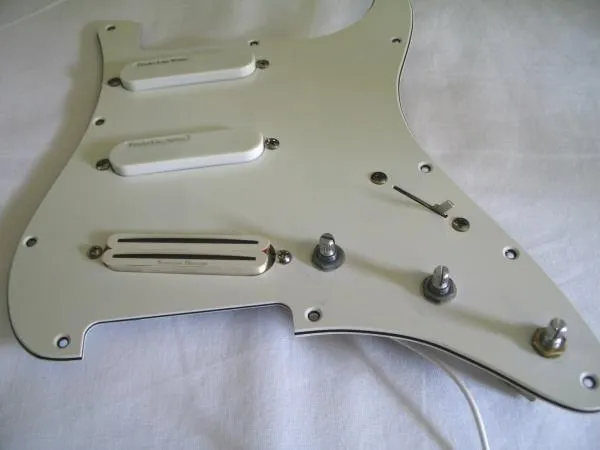
| MIJ / CIJ | Japan (Fender Japan, built by FujiGen, later Dyna Gakki) | 1982 | JV, SQ, E, A–V, then JD | 1987 Strat pickguard |
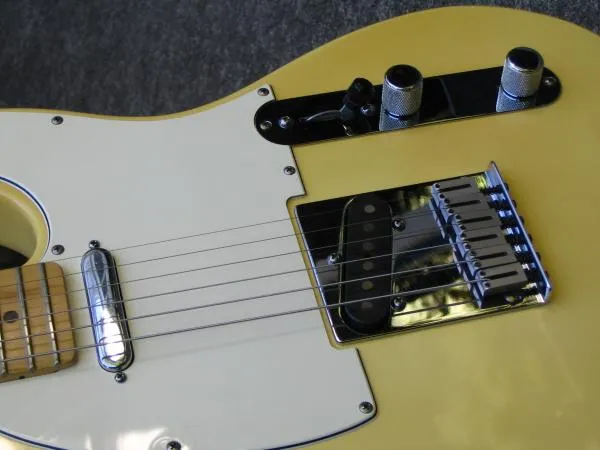
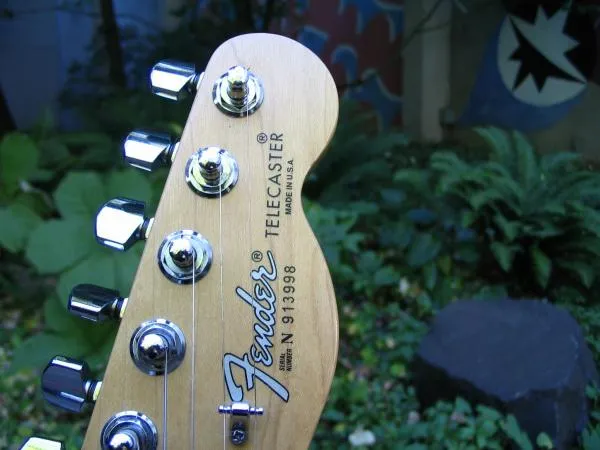
| MIA | USA (Corona, California since the late ’80s) | 1950s | E, N, Z, then US | 1990 Telecaster |
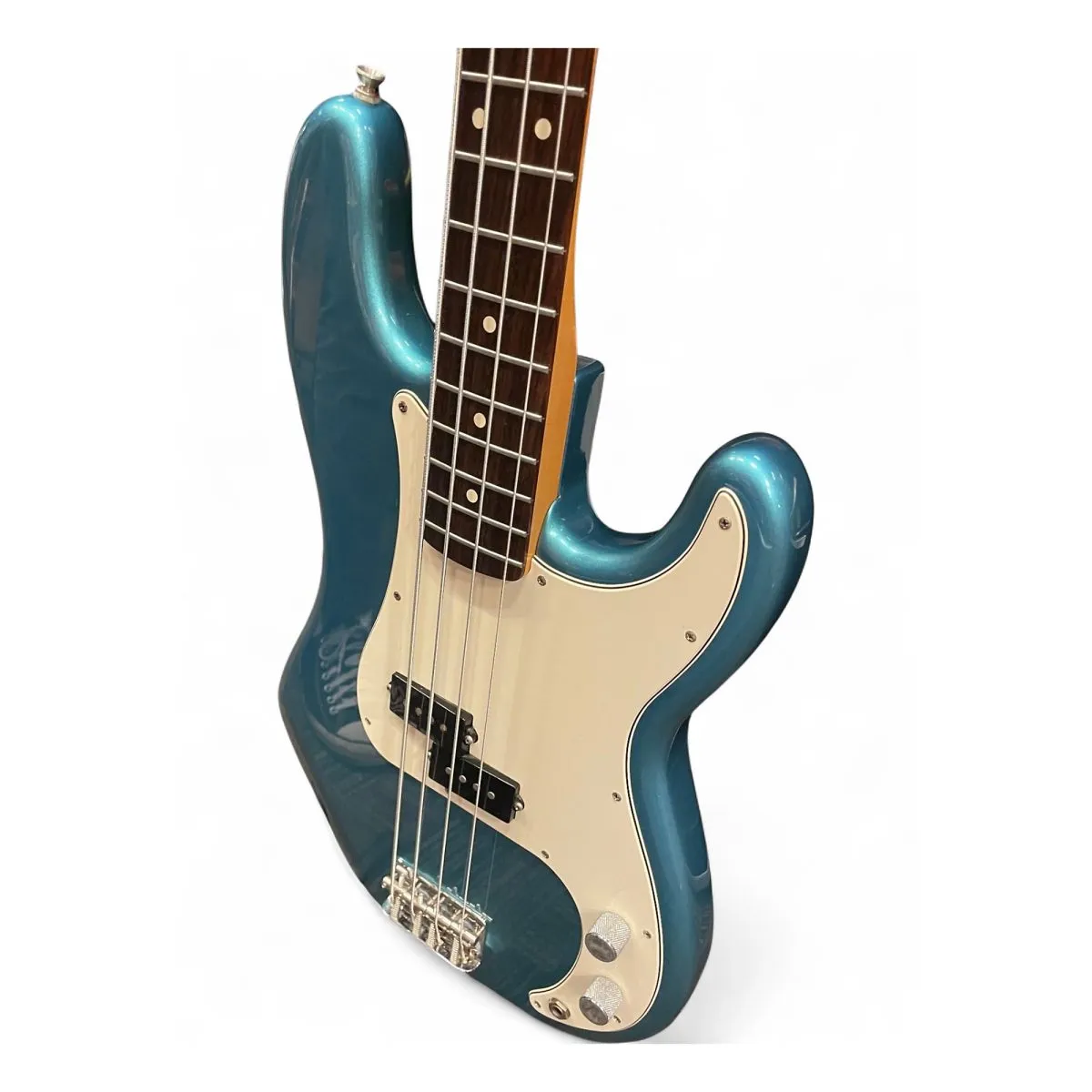
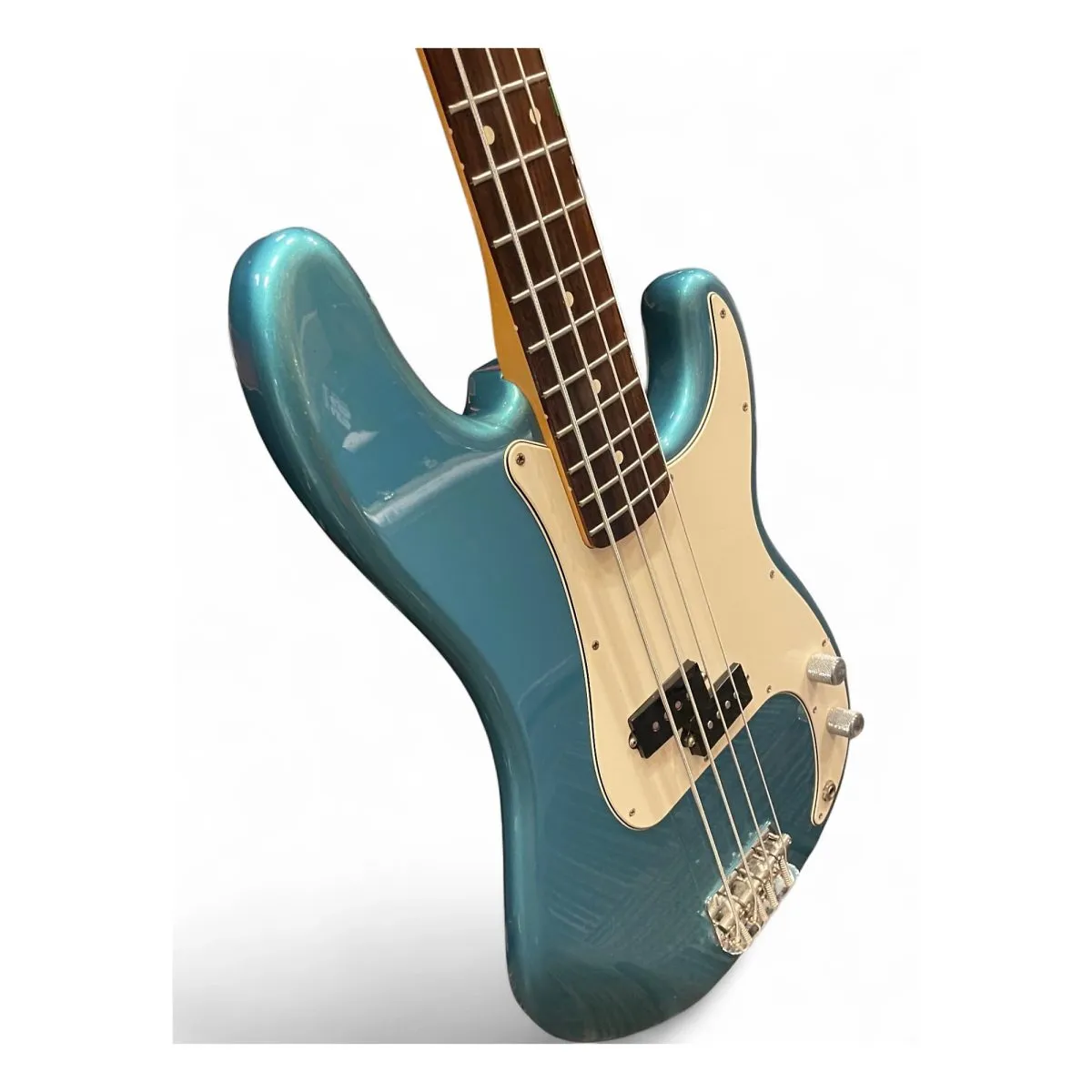
| MIM | Ensenada, Mexico | 1990 (factory 1987) | MN, MZ, then MX | 2010 P-bass (spotlight) |
Made in Japan: Fender Japan (1982 on)
In March 1982, Fender formed Fender Japan as a joint venture with two Japanese instrument distributors, Kanda Shokai and Yamano Gakki, along with the guitar maker FujiGen. The distributors didn’t build guitars themselves. FujiGen held the manufacturing contract from 1982 until 1995, and Dyna Gakki took it over in 1995–96.
Fender Japan mattered more than anyone expected. CBS sold Fender in March 1985, and while the new owners rebuilt US production, Japanese-made Fenders helped keep the company supplied. The pickguard in the archive comes from that era: a 1987 Fender Japan Strat guard, from what collectors call the “E-series” years, after the E serial prefix Fender used from 1984 to 1987.
MIJ or CIJ?
Fender’s own dating guide says that in 1997 its Japanese serial decals switched to “Crafted in Japan”, and that “Made in Japan” returned as a running change in 2007, so 2007–08 instruments can carry either. Wikipedia ties the change of wording to the change of factory and dates the first CIJ labels to 1995; Fender’s chart is the safer guide to dating. Either way, CIJ is still Japanese-made.
The joint venture ended on March 31, 2015, and Fender has run its Japanese business directly since then. Current Japanese serials start with JD followed by eight digits, the first two giving the year.
Parts don’t always swap. When the archive’s 1987 Fender Japan pickguard was listed in 2005, the seller’s best guess was that it would fit a US Strat, with “no guarantees.” It turned out that its screw-hole pattern differs from US- and Mexican-made Stratocasters, so it won’t fit those bodies without modification. Check measurements before buying replacement parts across countries.
Made in America: Fullerton, then Corona
Fender started in Fullerton, California. After the 1985 sale, US production restarted at a new factory in Corona, California, and in 1987 Fender launched the American Standard series, which stayed its flagship US line for nearly 30 years until the American Professional series replaced it in January 2017.
The 1990 Telecaster in the archive is an early American Standard, with the “MADE IN U.S.A.” marking on its headstock and an N-prefix serial. Fender introduced “N” for the 1990s in 1990, and some N9 decals, meant for 1999, were put on guitars that year by mistake. Our N9 serial guide covers that puzzle, and the TBX guide explains the American Standard’s clicking tone knob.
Made in Mexico: Ensenada (1987 on)
Fender set up its factory in Ensenada, Baja California, in 1987. According to Guitar World’s history of the plant, it started out packing strings in a converted church, moved to its current site in 1989, and began building guitars in 1990 through a joint venture with FujiGen, whose staff trained the Mexican workers. Fender’s own dating guide gives 1990 as the start of instrument production there.
Fender’s first price list with Mexican-made guitars, dated January 1, 1991, showed the Standard Stratocaster, Telecaster, Precision Bass and Jazz Bass, all models Fender had previously sourced from Japan. The Mexican Standard series ran until June 2018, when Fender’s Player series replaced it.
Our gear spotlight is one of those Mexican Standards: a 2010 Precision Bass with an MX10 serial and “MADE IN MEXICO” on the back of the headstock.
How to tell where a Fender was made
- Read the decal. Look for “Made in U.S.A.”, “Made in Mexico”, “Made in Japan” or “Crafted in Japan”, usually on the headstock, front or back. For the short-lived late-2009 serials that start “10”, Fender says the decal is the only place the origin appears.
- Find the serial. Fender has used the neck plate, the front or back of the headstock and the back of the neck near the body.
- Check the prefix against the table below.
- Cross-check the features. Fender warns that serials are “only a guide,” especially for early Japanese guitars, whose records “are not complete.” Neck dates, hardware and finish help confirm the year.
| Origin | Prefix | Years (per Fender) |
|---|---|---|
| Japan | JV + 5 digits / SQ + 5 digits | 1982–84 / 1983–84 |
| Japan | E + 6 digits | 1984–87 |
| Japan | A through V + 6 digits (overlapping) | 1985–97 |
| Japan | “Crafted in Japan” + letter | 1997–2008 |
| Japan | JD + 8 digits | 2012 on |
| USA | E + digit (1980s), N (1990s), Z (2000s) | 1979–2010 |
| USA | US + year digits | About March 2010 on |
| Mexico | MN / MZ | 1990–2000 / 2000–10 |
| Mexico | MX + year digits | 2010 on |
These are the main schemes. Fender also used plenty of special prefixes (V for American Vintage reissues, for example), so check its full dating pages for anything unusual.
Does the country matter?
It tells you a lot about where a guitar sat in Fender’s range when it was new, but it isn’t a quality verdict on its own. The lines blur more than the shorthand suggests:
- Mexico’s first guitars were Standard models that had previously come from Japan, and the factory was set up with FujiGen’s help and Japanese methods.
- Fender’s late-’90s California Series used an AMXN serial prefix, and Fender describes those guitars as sharing “U.S./Mexico origin.”
- Model lines and specs change over time within each country, so compare the actual model and year, not just the flag.
Forums are full of rankings (“MIJ beats MIA,” “avoid MIM”). Treat them as opinions. A well-set-up Mexican Standard can play better than a neglected American one, and the only reliable test is the guitar in your hands: the neck, the frets, the electronics and the setup.
Sources
- How can I find out when my Japanese-made instrument was manufactured? — Fender Support
- How can I find out when my American-made instrument was manufactured? — Fender Support
- How can I find out when my Mexican-made instrument was manufactured? — Fender Support
- What Is the American Professional Series? — Fender
- 35 years of Fender Mexico: a timeline — Guitar World (Tony Bacon)
- Fender Ensenada Factory Marks 25 Years — Vintage Guitar
- Fender Introduces New Player Series (June 19, 2018) — PR Newswire
- Fender Japan — Wikipedia
- Fender (company) — Wikipedia