The short version
- Keep a small kit permanently packed in your gig bag or case, so it can’t be left at home. Sweetwater’s rule: “If it’s not with you it does you no good!”
- The essentials every source agrees on: spare strings, picks, a tuner, a strap, spare cables and basic tools.
- Then the things that save a show: 9-volt batteries, a power strip, tape, a flashlight and something to write with.
- Bass players: add a DI box and a long XLR cable. And don’t fix hum by defeating the ground pin on an amp’s power plug.
Why bother?
Because something always goes wrong. Premier Guitar’s Ted Drozdowski plays plenty of small towns where there’s no guitar shop within an hour, or one that “usually closes at 5 p.m., just about when we’re getting ready to load into the gig.” Fender’s advice for the first item on its list is blunter: “Don’t be the guy who didn’t have a spare set of strings when one broke halfway through the first set.”
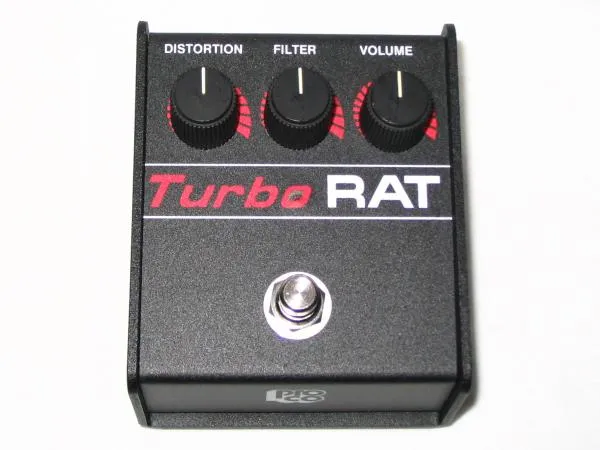
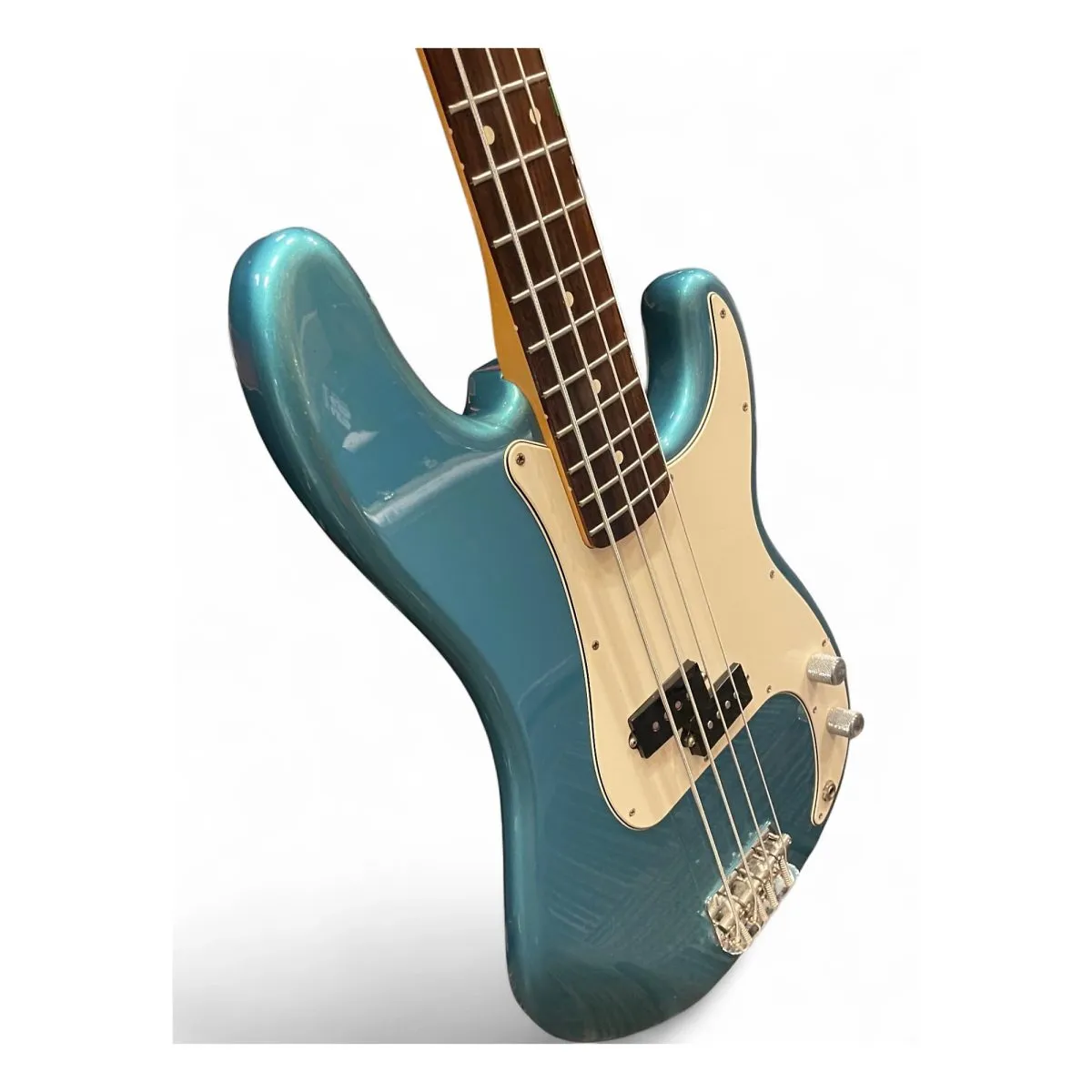
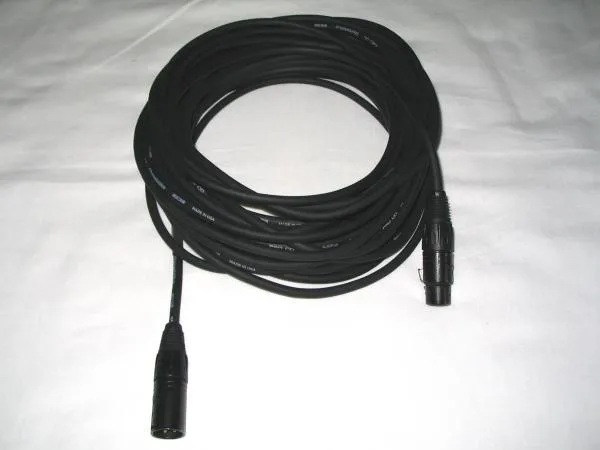
The seller behind this archive knew the drill. He spent his band years as the bass player in a cover band, ran his DI to the soundboard with the 50-foot XLR cable now in the archive, and bought his Boss GE-7 as a lead booster “for a few upcoming guitar gigs.”

The checklist
We compared three published lists from people who gig: Fender’s “15 Other Things You Should Have in Your Gig Bag,” Sweetwater’s “10 Gig Bag Essentials” and Ted Drozdowski’s go bags in Premier Guitar. Here’s what they recommend.
| Item | Why | Recommended by |
|---|---|---|
| Spare strings | Strings break mid-set. Fender calls it the most important item. | Fender, Sweetwater, Premier Guitar |
| String winder and cutters | So a string change takes minutes, not half an hour | Fender, Sweetwater, Premier Guitar |
| Tuner | A small clip-on works even if the pedalboard stays home | Fender, Sweetwater, Premier Guitar |
| Picks | They vanish | Fender, Sweetwater, Premier Guitar |
| Spare strap | Forgotten straps happen, yours or a bandmate’s | Fender, Sweetwater, Premier Guitar |
| Spare cables | Instrument cables, short pedal cables, mic cables | Fender, Sweetwater, Premier Guitar |
| 9-volt batteries | For pedals and active pickups when the nearest store is miles away | Fender, Premier Guitar (Sweetwater as an extra) |
| Tools | Truss-rod wrench, small screwdrivers or a multi-tool | Fender, Sweetwater, Premier Guitar |
| Flashlight | Bar stages are dark; a phone light ties up your phone | Fender, Sweetwater, Premier Guitar |
| Power strip and extension cords | “Count on there not being enough outlets” | Fender, Premier Guitar |
| Tape | Black gaffer or duct tape; Fender says the uses are too many to list | Fender, Premier Guitar |
| Pen, marker, paper | Set lists, labeling the board, notes | Fender, Sweetwater |
| Business cards | For the next booking | Fender, Sweetwater |
| Hearing protection | Stage volume next to the drums “can take its toll” | Sweetwater |
| Polish cloth | Wipe the instrument down after the set, or the neck mid-gig | Sweetwater |
| Capo and slide | If your songs need them | Sweetwater, Premier Guitar |
| Wall-socket tester | Tells you when an outlet is dead before you blame your amp | Premier Guitar |

Three that deserve a closer look
- Batteries. Fender’s reasoning: “Not every rehearsal or gig is near a convenience store.” The seller shipped both his Turbo RAT and his GE-7 with a fresh 9-volt in the box as well as the one inside.
- Cables. The cable you don’t pack is the one that crackles. Fender: “The day will come when you hear the maddeningly annoying crackle of a bad cable. Be ready for it.” Carry one more of each type you use, and remember that an instrument cable and a speaker cable aren’t interchangeable (see our speaker-wire guide).
- Power. Drozdowski once traced “no juice hitting the amp” to a dead outlet with his wall tester, and packs extension cords and spare AC power cables for amps that show up without one.
Extras for bass players
Bass usually goes to the PA as well as to the amp, so a bassist’s bag has a couple of extra jobs:
- A DI box. It converts the bass’s high-impedance signal into the low-impedance, balanced feed a soundboard wants; Radial describes its JDI as doing “both high-to-low impedance conversion and signal balancing.” Radial says its passive ProDI “sends the pure sound of the bass to the PA and to the player’s amp,” and that its transformer isolation prevents ground-loop hum.
- A long XLR cable. That’s exactly what the archive’s Pro Co 50-footer was for: “to run a line from my DI to the board when I played bass in a cover band.” Drozdowski packs his own mic cables because he has played gigs where the promised mics turned out to be none at all.
- A boost for fills and solos. The seller used his Turbo RAT on bass when he wanted “a lead/boost with a little bit of dirt.” Our GE-7 guide covers using an EQ pedal as a clean boost.
- The right speaker cable if you bring a head and cabinet, and never power up a tube head without a speaker connected.

Hum, and the “fix” to skip
Some gig-bag lists, Fender’s among them, suggest carrying a ground-lift adapter to cure hum and fit old two-prong outlets. Be careful with that advice. A three-to-two-prong adapter leaves the third, grounding prong on your amp’s power cord unconnected, and that prong is a safety feature. The University of Kentucky’s safety guidance is plain: “Do not use an adapter or extension cord to defeat a standard grounding device.”
Safer ways to chase hum: check suspicious outlets with a tester, as Drozdowski does, and send bass or keys to the board through a transformer-isolated DI, which Radial says is built to stop ground-loop hum. If the hum won’t go away, have the venue’s wiring checked. Leave the grounding prong alone.
One bag or two?
Drozdowski keeps two kits: a small box for local gigs, with strings, picks, a winder and cutters, two cables, a clip-on tuner, a couple of 9-volts, a slide, a capo and some pedal cables; and a “Big Black Bag” for tours and bigger shows, with spare mics and mic cables, extension cords, stage towels, a wall tester, a flashlight and $20 in cash. Sweetwater’s approach is to keep duplicates in every gig bag, so whichever instrument you grab, the kit comes with it.

Either way, the point is the same. As Drozdowski puts it, he has used all of it “at one time or another,” and when bandmates have forgotten something, “I’ve had them covered.”
The list, in one place
- Spare strings (a full set), string winder and cutters
- Clip-on tuner
- Picks
- Spare strap
- Spare instrument cable, pedal patch cables and an XLR cable
- 9-volt batteries
- Truss-rod wrench, small screwdrivers or a multi-tool
- Flashlight
- Power strip, extension cord and a wall-socket tester
- Gaffer tape
- Pen, marker, paper and business cards
- Earplugs
- Polish cloth
- Capo and slide, if you use them
- Bass players: DI box, long XLR cable, speaker cable for a head and cab
Sources
- 15 Other Things You Should Have in Your Gig Bag — Fender
- 10 Gig Bag Essentials — Sweetwater InSync
- A Guitarist’s Go Bag: Essentials for Emergencies (Ted Drozdowski, July 22, 2024) — Premier Guitar
- ProDI passive direct box — Radial Engineering
- JDI passive direct box — Radial Engineering
- Extension Cord Safety — University of Kentucky Environmental Health and Safety
- What things will damage my tube amp? — Sweetwater SweetCare
Stock photos in this guide (credited in each caption) are provided by Pexels. Every other photo is our own.