The short version
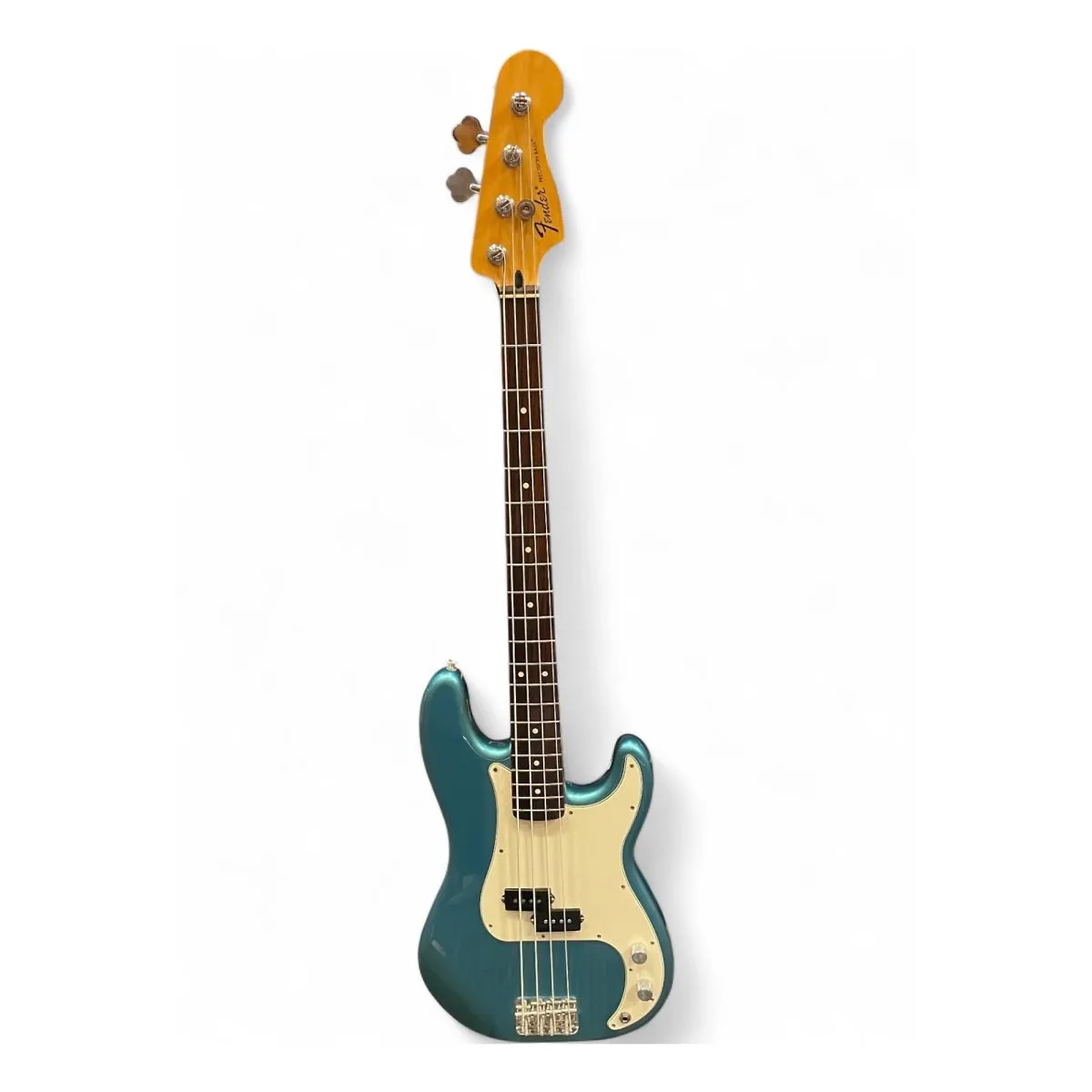
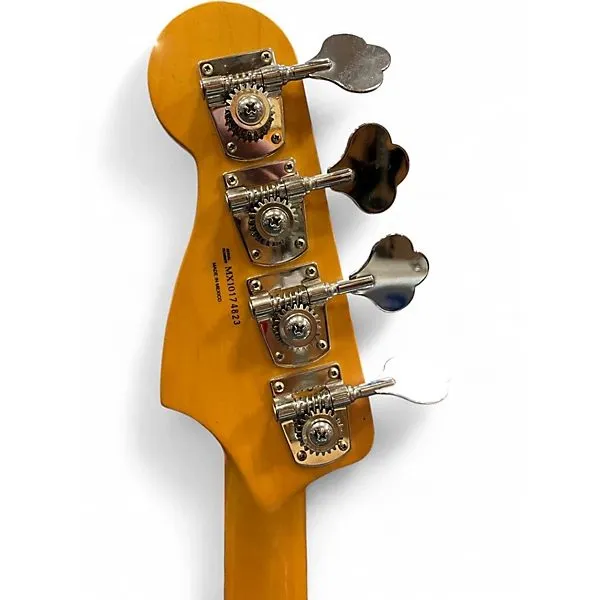
- This is a Fender Standard Precision Bass made at Fender’s factory in Ensenada, Mexico (MIM), and its MX10 serial dates it to 2010.
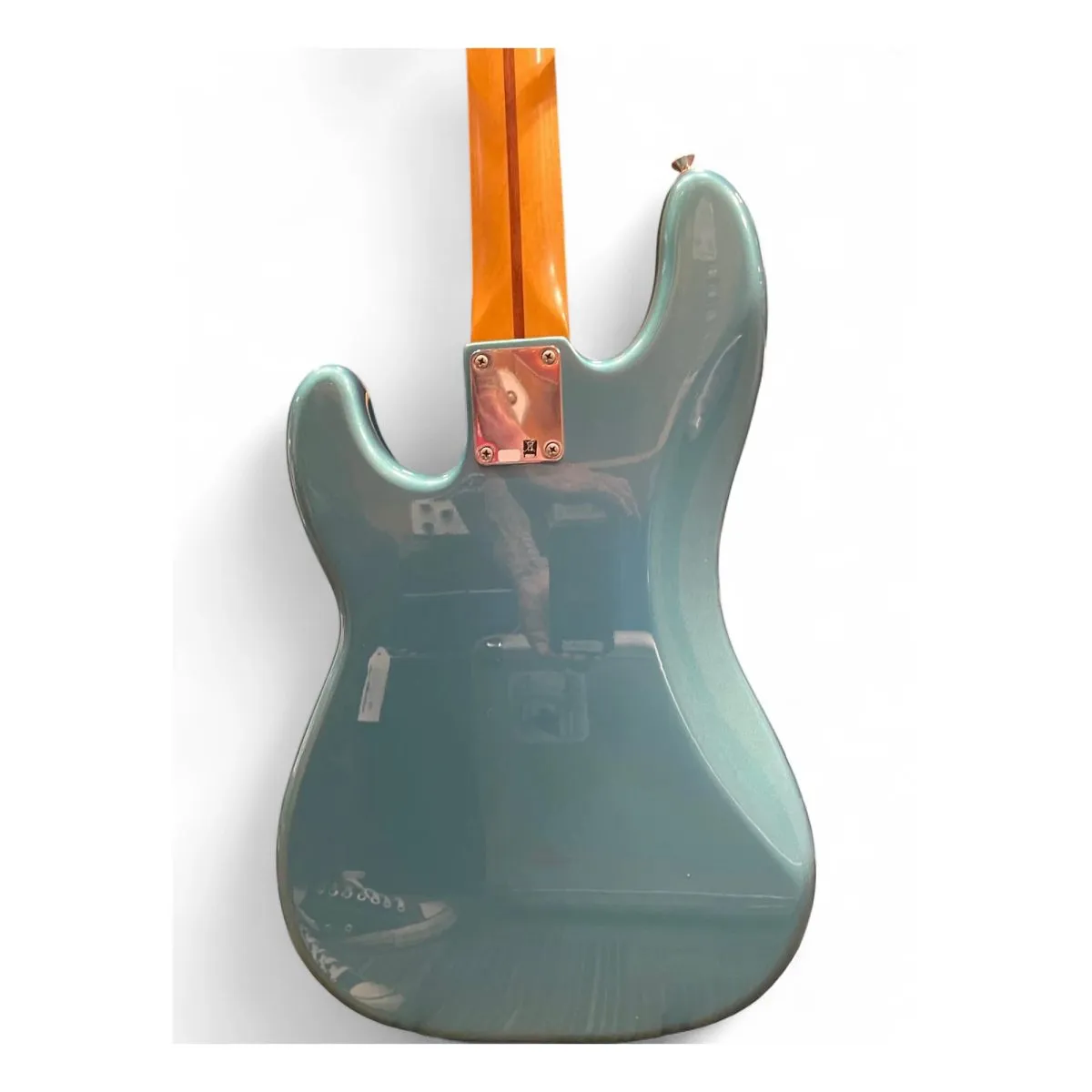
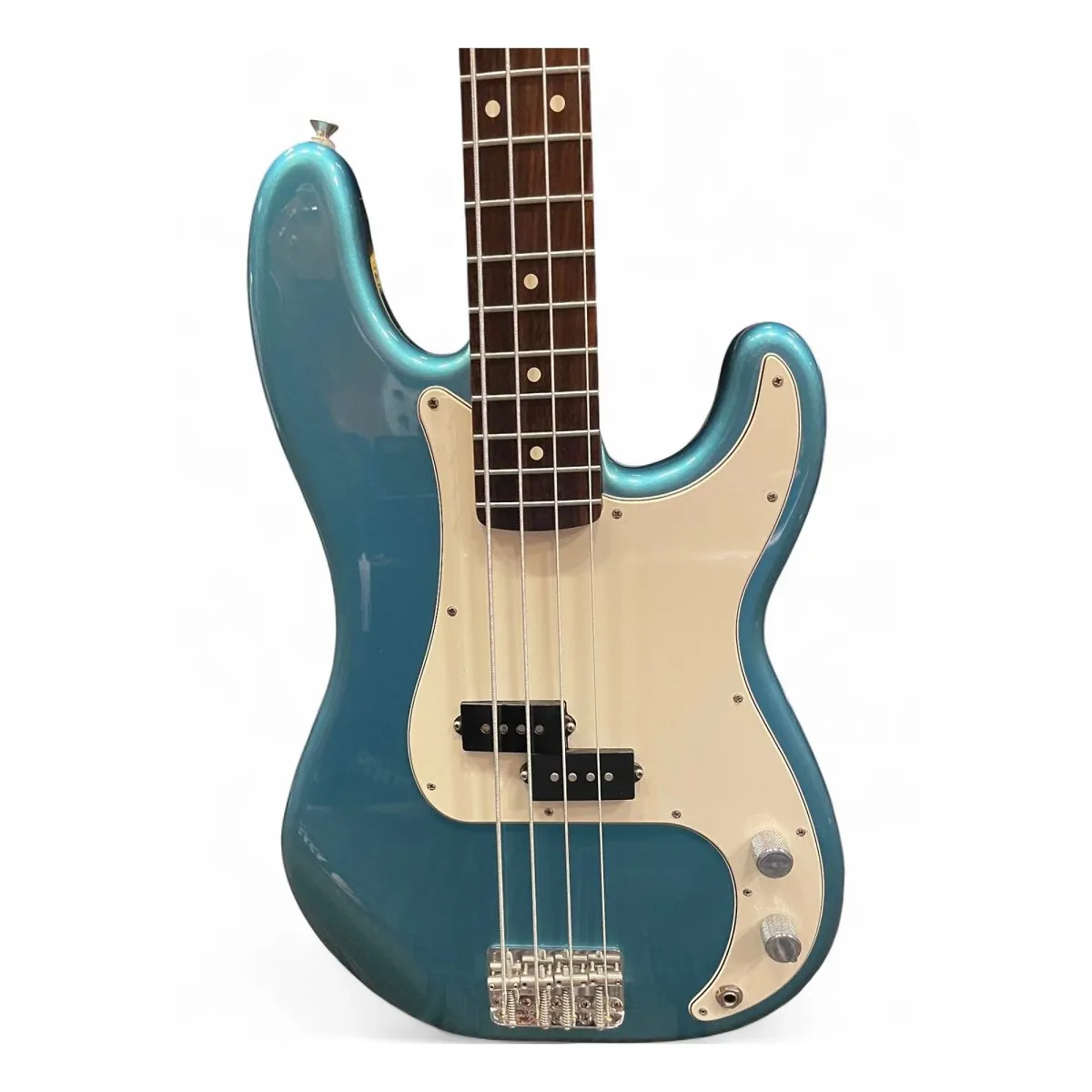
- It’s finished in metallic Lake Placid Blue (LPB) with a rosewood fretboard, a three-ply pickguard and the classic split-coil P-bass pickup.
- The Standard was Fender’s core Mexican-made P-bass: alder body, bolt-on maple neck, 34″ scale, one pickup, and just a volume and a tone knob.
The Mexican-made Standard Precision Bass
Fender has been building instruments at its Ensenada, Mexico factory since 1990. The Standard Precision Bass was the core of its Mexican-made bass line: a straightforward P-bass built to the same basic recipe Fender settled on in the late 1950s.
2010 examples follow a consistent spec. Dealer listings for other 2010 Standard P-basses describe an alder body with a gloss finish, a bolt-on maple neck with a satin back and a “C” profile, 20 frets on a roughly 9.5″ radius, a 1-5/8″ nut and the standard 34″ scale. Electronics are passive: a single split-coil pickup with master volume and tone controls. Rosewood and maple fretboards were both available; this one has rosewood.
Why it looks the way it does
The Precision Bass is where the electric bass guitar as we know it began. Fender first offered it for sale in October 1951, and the name referred to the precise, fretted intonation it offered compared with an upright bass.
The look this bass carries dates from 1957, the model’s most significant redesign. That year brought the Stratocaster-style headstock and pickguard, the split-coil humbucking pickup, and a bridge with four saddles for better intonation. A glued-on rosewood fingerboard followed in 1959. The basic design has stayed largely unchanged ever since, which is exactly why a P-bass from 2010 looks so much like one from the early ’60s.
A closer look at this one
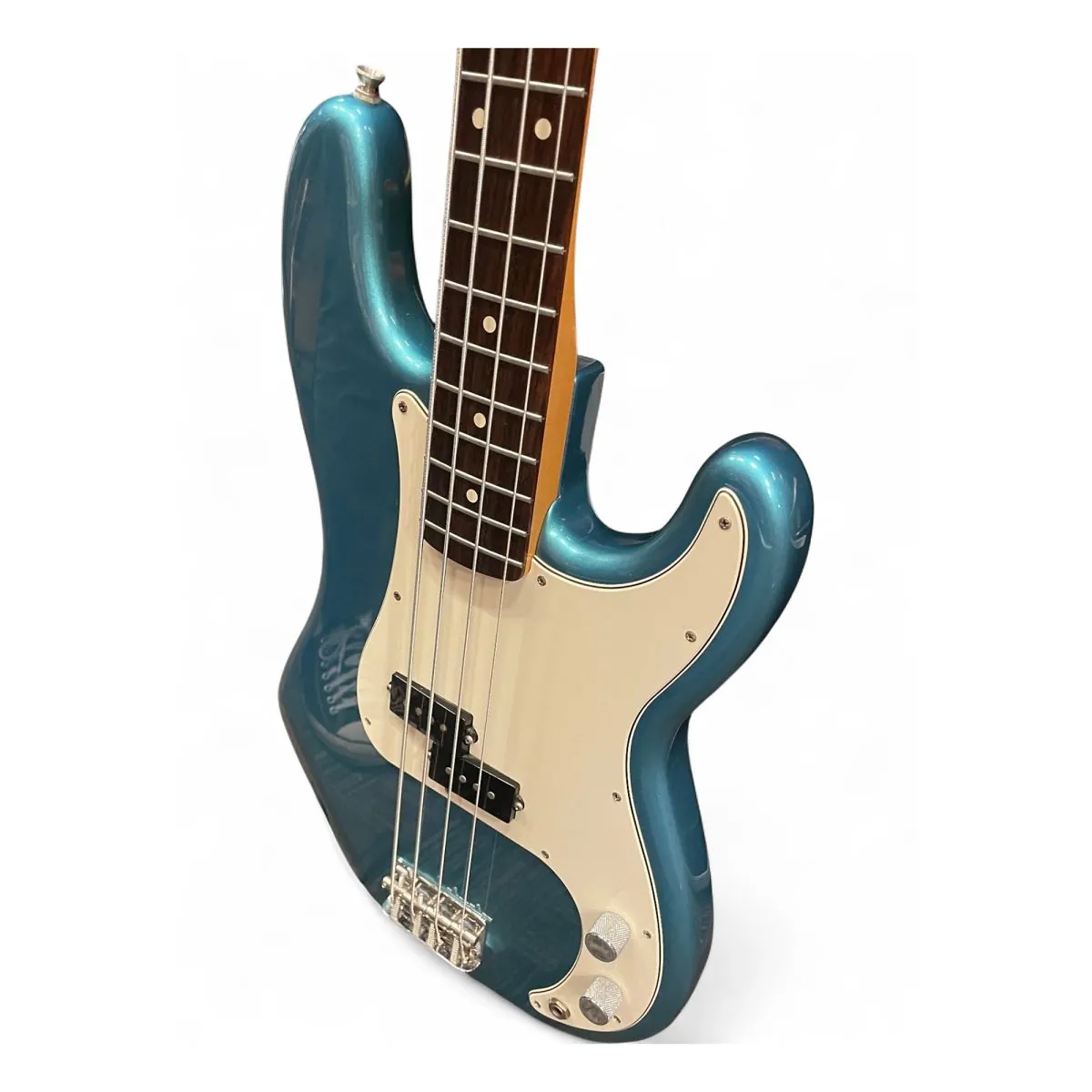
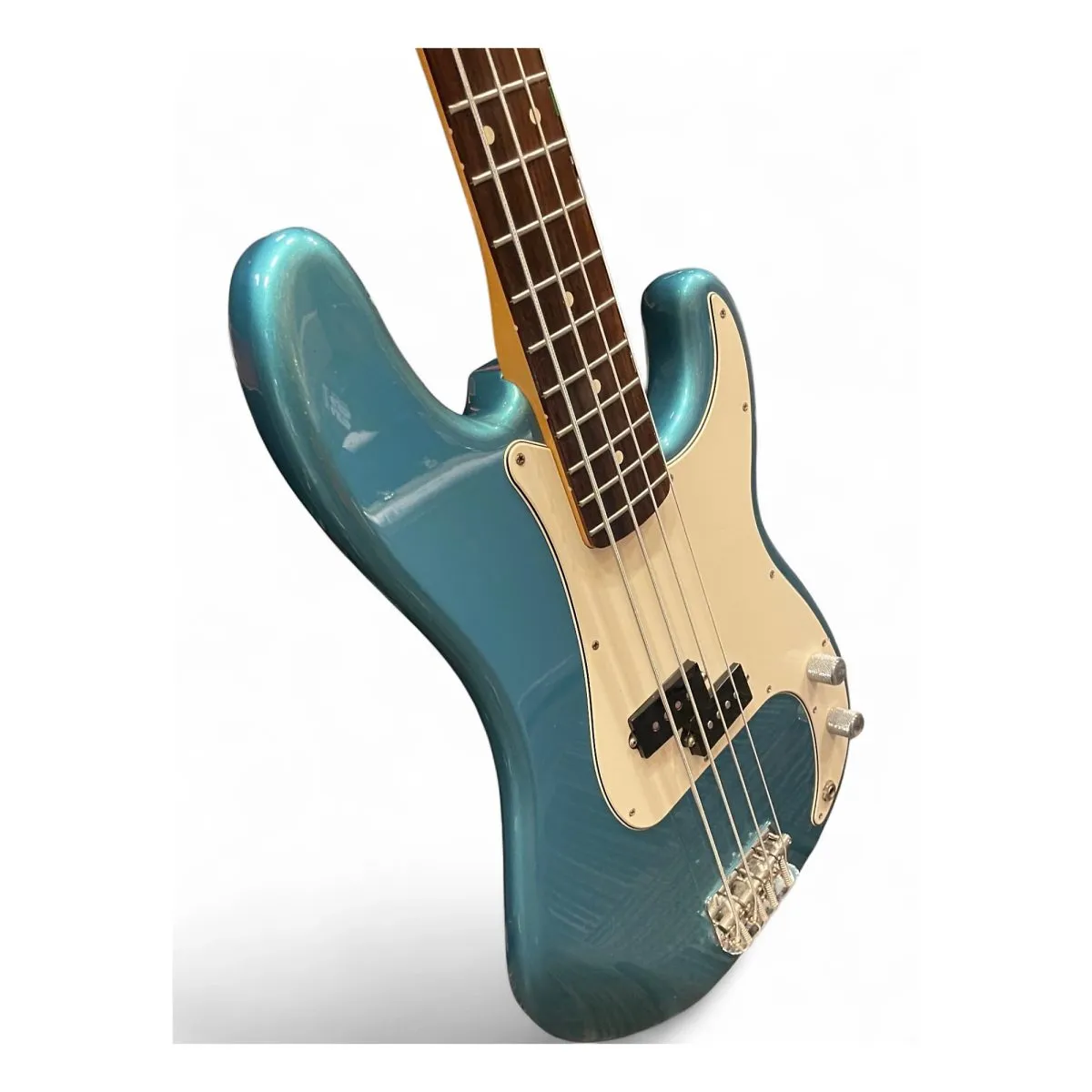
The photos show a bass that matches the 2010 Standard spec, with these details:
- Finish: metallic Lake Placid Blue. You can see the metallic flake in the close-ups, and its gloss is reflective enough to mirror the room in the back photo.
- Fretboard: rosewood with dot position markers, on a maple neck. A darker “skunk stripe” runs down the back of the neck.
- Pickguard and electronics: a three-ply pickguard carrying the split-coil pickup, volume and tone knobs with knurled tops, and the output jack.
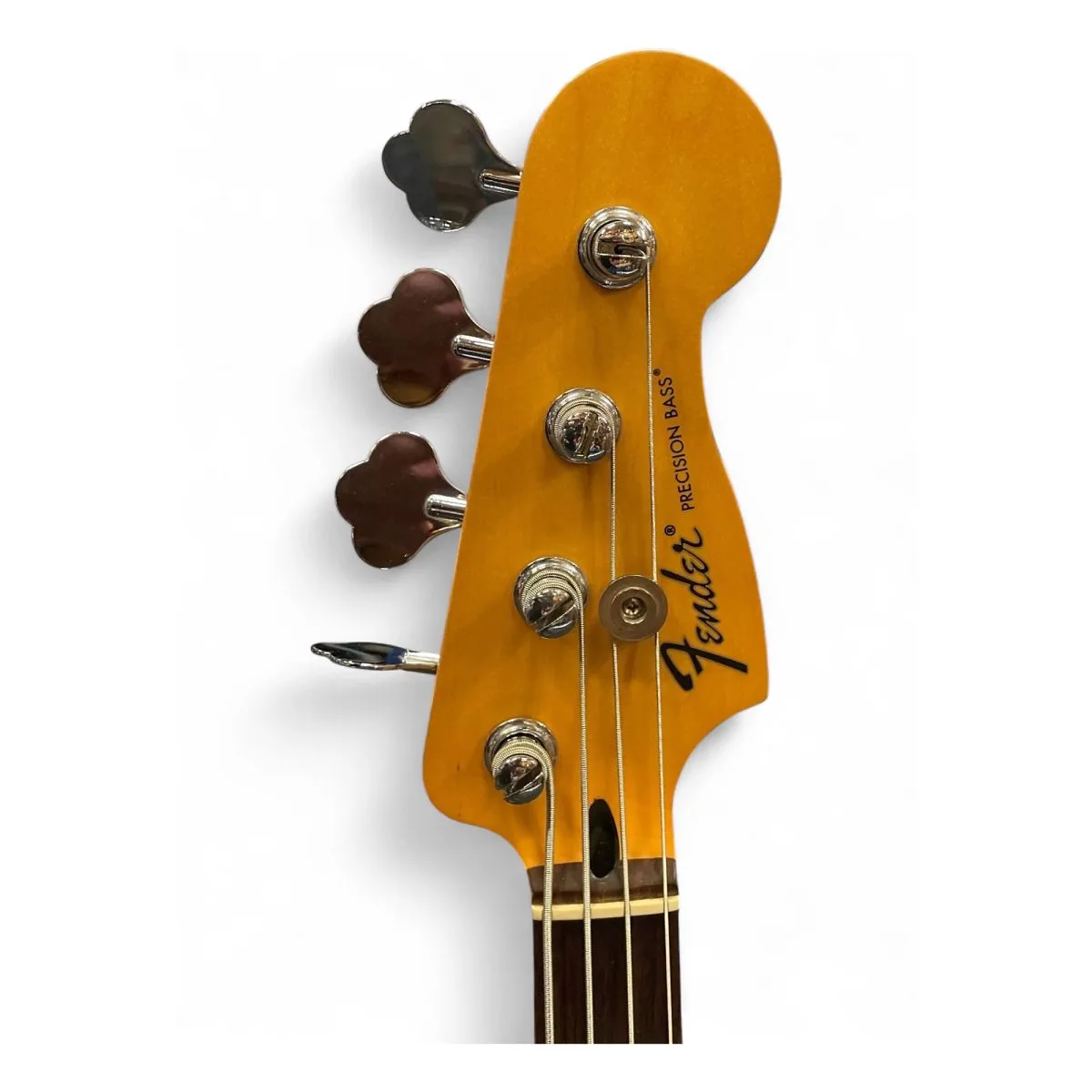
- Hardware: a four-saddle bridge, open-gear tuners with cloverleaf keys, a single round string tree and a four-bolt neck plate.
- Headstock: the Fender logo with “PRECISION BASS” on the front, and the serial with “MADE IN MEXICO” on the back.
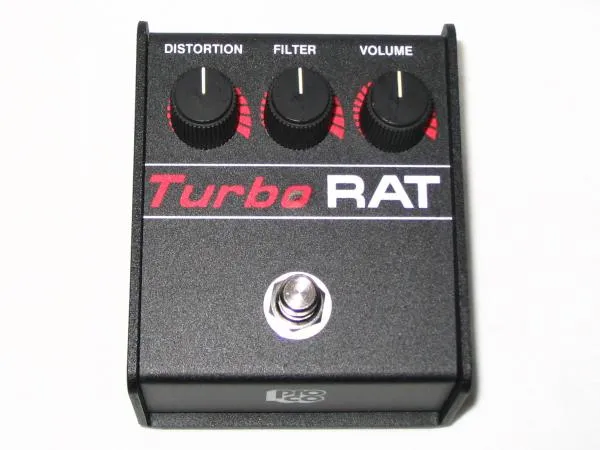
It’s a fitting addition to a site whose 2005 seller spent those years playing bass in a cover band. His 50-foot XLR cable carried his bass DI to the board, and he used his Turbo RAT on bass as a lead boost.
Reading the MX10 serial
Fender’s own dating guide for Mexican-made instruments explains the scheme. Instruments from the 1990s carry MN prefixes (M for Mexico, N for the ’90s), and the 2000s brought MZ. Around 2010, Fender switched to MX followed by eight digits, where the first two digits give the year. So MX10 means 2010, MX11 means 2011, and so on. Fender lists MX10 serials under 2010–2011 production.
One wrinkle: for a few months around the end of 2009, Fender used a short-lived scheme with a “10” prefix, a space and seven digits. Those serials don’t encode the country of origin, so the “Made in” line on the back of the headstock is what tells you where the instrument was built.
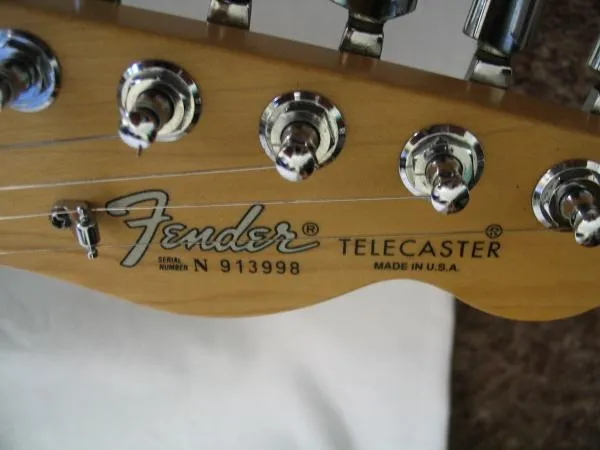
American-made (MIA) Fenders moved to a similar “US” + two-digit-year scheme in 2010. For the earlier US prefixes, and why some 1990 American Fenders carry “1999” serials, see our guide to N9 serial numbers.
Checking a used MIM P-bass
Standard P-basses are plentiful on the used market. If you’re looking at one, a quick checklist:
- Serial and decal: the prefix should match the claimed year, and “Made in Mexico” should appear on the back of the headstock.
- Neck: sight down the neck for excess bow or twist, and make sure the truss rod still adjusts.
- Frets: look for flat spots or grooves under the first few strings, and buzz up the neck.
- Electronics: both halves of the split-coil pickup should be equally loud, string to string, and the knobs shouldn’t crackle.
- Hardware: check that the knobs, pickguard and tuners are original if that matters to you. Swapped parts are common and easy to spot when you know the stock spec above.
Sources
- How can I find out when my Mexican-made instrument was manufactured? — Fender Support
- How can I find out when my American-made instrument was manufactured? — Fender Support
- Fender Precision Bass — Wikipedia
- 2010 Fender Standard Precision Bass (dealer listing) — Bass Bros
- Fender Standard Precision Bass, 2010 (dealer listing) — Chicago Music Exchange