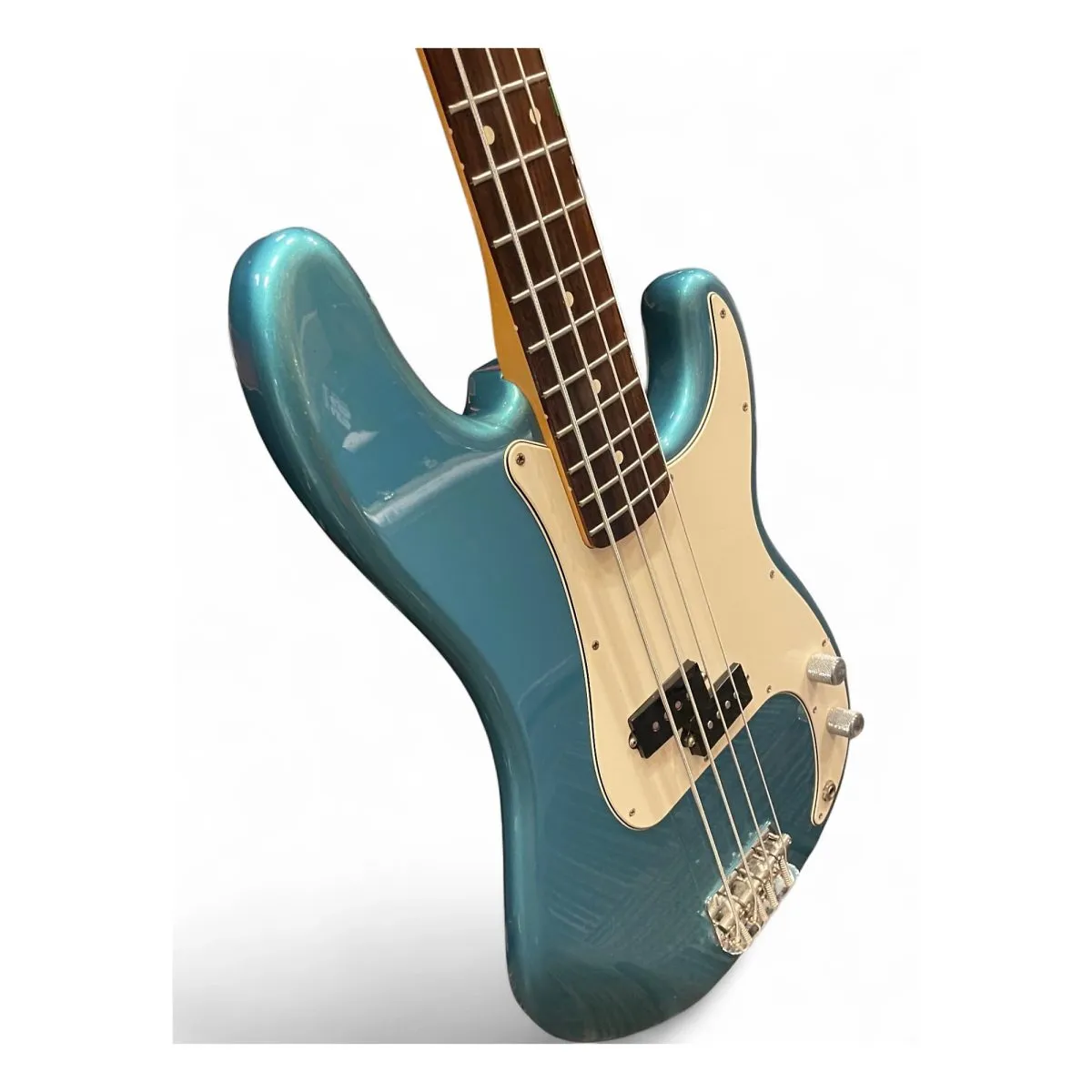
The short version
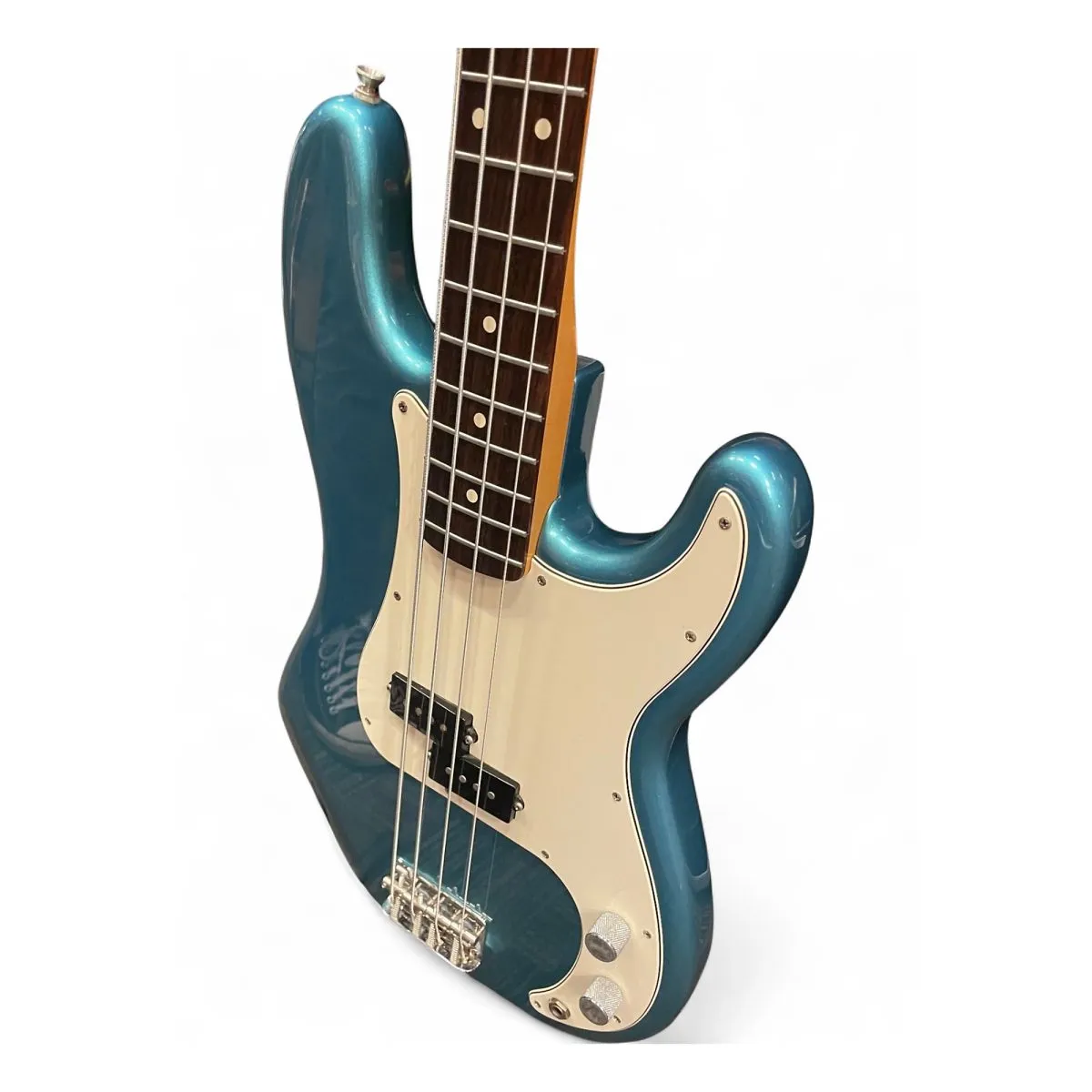
- The Precision Bass (1951) has one split-coil pickup, a fuller neck and a deep, full-bodied sound. The Jazz Bass (1960) has two single-coil pickups, a slimmer tapered neck, an offset body and a brighter voice with more midrange growl.
- Both use a 34″ scale, so the fret spacing is the same; the big differences are the neck shape and the pickups.
- Neither is “better.” Fender’s own advice is that the choice is “best left up to the player,” and that you should try both.
- Can’t decide? A PJ bass puts a Precision pickup in the middle and a Jazz pickup at the bridge.
P vs J at a glance
| Precision Bass | Jazz Bass | |
|---|---|---|
| Introduced | October 1951 | Spring 1960 (first called the “Deluxe”) |
| Body | Double cutaway; contoured since 1954–55 | Offset waist, like the Jazzmaster guitar |
| Neck at the nut | Fuller, roughly 43 mm (varies by model) | Tapered, roughly 38 mm |
| Scale | 34″ | 34″ |
| Pickups | One split-coil, hum-cancelling (since 1957) | Two single coils, neck and bridge |
| Controls | Volume, tone | Volume, volume, tone |
| Sound | Deep and full-bodied | Brighter, with midrange growl |
A little history
Fender produced the first commercial Precision Bass in October 1951. Bands were getting louder, and the upright bass was big, awkward to haul around and hard to hear. Leo Fender’s answer was a bass you could strap on, plug in and play in tune with frets, which is where the “Precision” name comes from. He settled on a 34″ scale after a lot of experimenting, and it became the standard for full-scale electric basses.
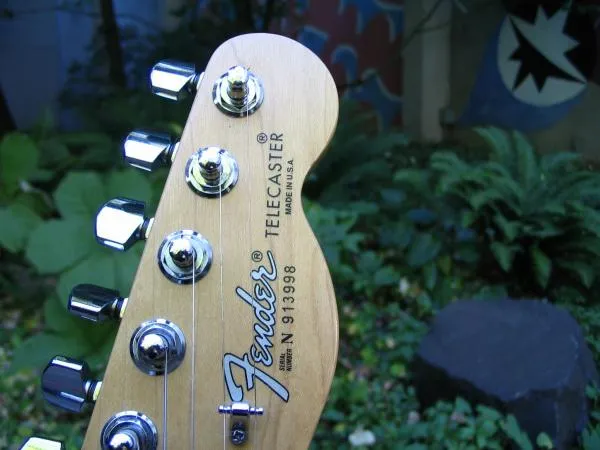
The first P-bass had a flat “slab” ash body, a Telecaster-style headstock and a single-coil pickup. Body contours arrived in 1954–55, and in 1957 came what Fender calls the “second and most substantial revision”: the split-coil pickup, the Stratocaster-style headstock and a new bridge. That 1957 design, Fender says, “endures today basically unchanged.”
The Jazz Bass followed in spring 1960. Fender first called it the Deluxe and pitched it as a stablemate to its Jazzmaster guitar, with the same offset body, a slimmer neck that tapers toward the headstock, and two pickups instead of one. The earliest Jazz Basses had stacked volume-and-tone knobs for each pickup; the familiar three-knob layout took over from late 1961.
The neck: the difference you feel first
Fender sums it up neatly: the Precision neck is “meatier at the nut (roughly 43mm) and maintains a pretty consistent thickness along its length,” while the Jazz neck “tapers as you get to the nut (roughly 38mm).” Fender says some players find the narrower Jazz neck easier to finger, and calls it ideal for “faster and more intricate runs.”
Exact widths vary by model and era. The 2010 Mexican Standard P-bass in our spotlight, for example, has a 1-5/8″ (about 41 mm) nut, between the classic P and J widths. If neck feel matters most to you, start your comparison there.
The body
The P-bass body is a fairly symmetrical double-cutaway shape with comfort contours. The Jazz Bass borrowed the Jazzmaster’s offset waist, which Fender says “moved the body away from the player’s picking arm.”
Pickups and sound
Precision: one split-coil pickup
Since 1957 the P-bass has used a split-coil pickup: two halves, each under two strings, wired so that hum cancels. Fender describes it as delivering “thunderous low-end and clear high-end.” The controls are just volume and tone.
Jazz: two single coils
The Jazz Bass has two single-coil pickups, one near the neck and one near the bridge, each with two pole pieces per string. Fender calls the result “a brighter, more trebly tone with healthy midrange growl.” Its 60th-anniversary write-up credits the pair with “deep round tones,” a “mid-range growl in the newly-placed bridge pickup” and “bell-like high-end.” Separate volumes let you blend them:
- Both up full: the classic Jazz sound. The two pickups are built opposite to each other in magnetic polarity and electrical phase, so together they cancel hum.
- Favoring the neck pickup: deeper and rounder.
- Favoring the bridge pickup: more of that midrange growl. With one pickup on its own you lose the hum-cancelling, so expect a little buzz.
Can’t choose? Go PJ
Fender also builds basses with a Precision pickup in the middle position and a Jazz pickup at the bridge “for even more sonic flexibility.” A PJ gives you the P-bass sound with the Jazz bridge pickup on tap.
Who played which
Fender lists these among the players associated with each bass:
| Precision Bass | Jazz Bass |
|---|---|
| James Jamerson (Motown) | Jaco Pastorius (Weather Report) |
| Carol Kaye (the Wrecking Crew) | John Paul Jones (Led Zeppelin) |
| Donald “Duck” Dunn (Booker T. & the M.G.’s) | Larry Graham (Sly and the Family Stone) |
| Roger Waters (Pink Floyd) | Geddy Lee (Rush) |
| Dee Dee Ramone (the Ramones) | Noel Redding (The Jimi Hendrix Experience) |
| Steve Harris (Iron Maiden) | Flea (Red Hot Chili Peppers) |
| Paul Simonon (the Clash) | Adam Clayton (U2) |
| Duff McKagan (Guns N’ Roses) | Verdine White (Earth, Wind & Fire) |
Fender credits Jamerson’s Motown hits largely to a 1962 Precision he called “the Funk Machine.” Some players used both: Fender lists Sting under the Precision in one article and the Jazz Bass in another.
How to choose
- Want one big, simple sound? The Precision’s single pickup and two knobs are built for that “thunderous low-end.”
- Want more tonal range, or a slimmer neck? The Jazz Bass’s two pickups and tapered neck give you more to play with.
- Want both? Look at a PJ.
- Above all, play them. Fender’s advice is to “audition both models (or maybe a few of each)”, because it “comes down to look, feel and sound.”
Buying used? Fender’s affordable Mexican-made Standard P and J basses were made from the early ’90s until Fender replaced the Standard series with the Player series in 2018, so there are plenty around. Our 2010 Standard Precision Bass spotlight has a checklist for inspecting one, and our MIJ, MIM and MIA guide explains how to tell where a Fender was made.
Sources
- Precision Bass or Jazz Bass: Which Is Right for You? — Fender
- Legendary Lows: The Precision Bass Story — Fender
- 60th Anniversary Jazz Bass: Turning Sixty in Style — Fender
- Fender Introduces New Player Series (June 19, 2018) — PR Newswire
- 35 years of Fender Mexico: a timeline — Guitar World (Tony Bacon)
- Fender Precision Bass — Wikipedia
- Fender Jazz Bass — Wikipedia