The short version
- Warmoth is a Washington State company that makes electric guitar and bass necks and bodies in many woods, shapes and finishes, along with hardware and accessories. It does not sell complete guitars, which is why it is the go-to name for a partscaster: a guitar built from parts. The same idea gives you a parts bass, a parts Tele or a parts Strat.
- Its roots run through Boogie Bodies, the 1970s parts maker linked to Eddie Van Halen’s Frankenstein guitar, though the details are disputed.
- I have built several instruments using parts from Warmoth and from The STRATosphere, and the two work well together: Warmoth for the wood, The STRATosphere for the hardware and the rest.
- GFS (Guitar Fetish) gets an honorable mention. It is a budget-friendly source of pickups and parts that I would call a value pick, with the usual cautions.
- Warmoth gets lots of praise and some pointed complaints, mostly about lead times, service and neck-pocket fit. We sort them below, with dates.
- You can shop used and new Warmoth and GFS parts on eBay and Reverb from the table near the end.
Who Warmoth is
According to Seattle Business magazine (2018), Warmoth Guitar Products was founded by Ken Warmoth in 1980 and is based in Puyallup, Washington, and by then was run by his daughter, Sandy Warmoth Hosfelt, with 65 employees. The same article credits it with pioneering the compound-radius fretboard and the laminated forearm contour on drop-top bodies.
The earliest history is told several ways, and it runs through a famous name. We untangle what we could below.
Seymour Duncan, which is a Warmoth partner and sells pickups through it, says Warmoth no longer supplies other manufacturers, and that it makes bodies and necks but not complete instruments. It adds a detail I like: because of licensing deals with the big headstock-shape names, Warmoth keeps its own branding off the visible side of its necks, which is why so many Warmoth necks pass as something else. Treat that as the partner’s account, not a Warmoth statement. Warmoth’s own site refused to load for us, so nothing here comes from it. The community also runs the Unofficial Warmoth forum, full of home builds.
Boogie Bodies, Eddie Van Halen and where Warmoth came from
Before Warmoth there was Boogie Bodies. The most detailed history we found is on the fan site Van Halen Gear Timeline, which warns that it is a work in progress and may not be fully accurate. Its account: Lynn Ellsworth first made guitar bodies for Wayne Charvel’s California shop around 1975, then teamed up in 1976 with Jim Warmoth, who helped with machinery and templates, to form Boogie Bodies. They split in 1980, and Jim’s son Ken carried on making parts and eventually created the Warmoth company known today.
Other accounts fit the same family tree but name the people differently. Seymour Duncan’s dealer spotlight says Warmoth was then called Boogie Bodies, and a 2009 Premier Guitar piece says Ellsworth partnered with Ken Warmoth in the late 1970s. The 2018 Seattle Business article says Ken founded Warmoth in 1980. We could not settle who did what, but the sources we read agree that Warmoth’s roots run through Boogie Bodies.
That matters because of Eddie Van Halen’s “Frankenstein” guitar, the most famous partscaster of all. According to Wikipedia, Van Halen bought its ash body around January 1977 from Wayne Charvel, who distributed Boogie Bodies necks and bodies as well as Schecter and Mighty Mite parts, and added a Boogie Bodies neck, which Wikipedia puts at about $80, in summer 1977. The body is disputed: Van Halen said in early interviews that Boogie Bodies made it, but Wikipedia says its shape does not match Boogie Bodies’ Strat bodies of the era and does match a Schecter-pattern body that Charvel distributed. The fan site agrees with that view. So the neck is a documented Boogie Bodies part and the body is contested.
Where does that leave today’s Warmoth? A descendant, by these accounts, not the same company with an unbroken line, and we found nothing from Warmoth itself claiming the Van Halen connection (its site would not load for us). It is still a good story for anyone building a parts guitar: the original rock-and-roll partscaster was an ash body and a Boogie Bodies neck.
Why I like building with it
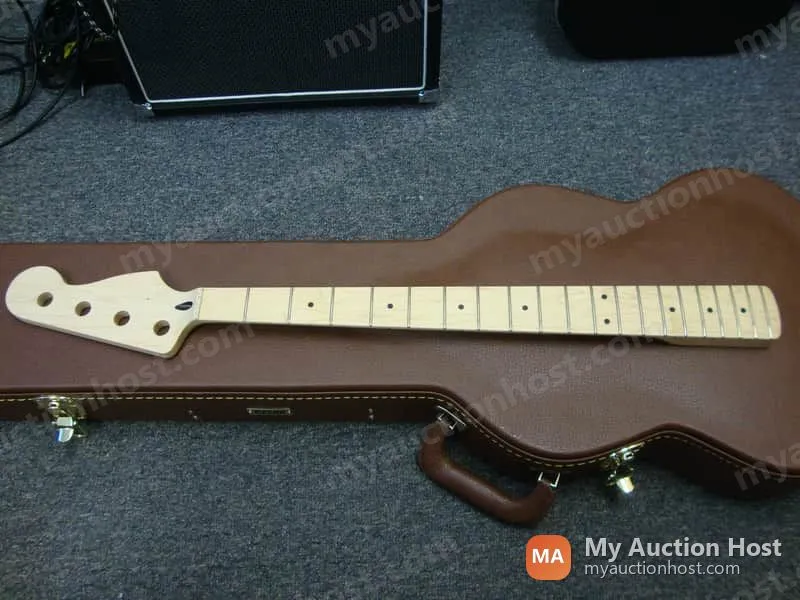
The appeal is choice. You can pick the body shape, the wood, the top, the contours and the finish, and the neck profile, scale length, fretboard and frets. For a build that has to feel a particular way, that beats searching for a finished guitar that is almost right. Our maple vs. rosewood fingerboards guide is a good primer before you click through the options, and our Precision vs. Jazz Bass guide helps if you are building a bass.
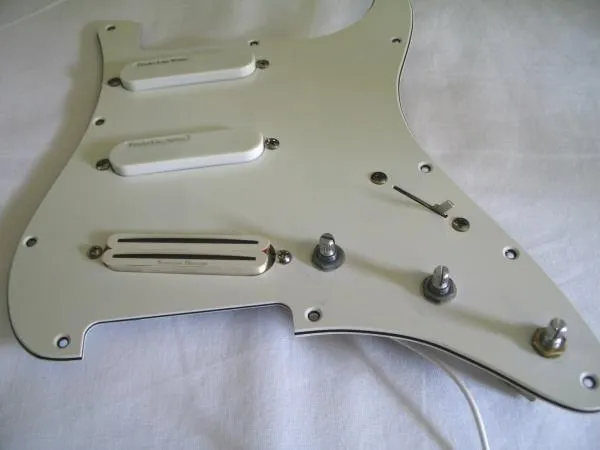
A guitar built this way is a partscaster, and the idea is not limited to Strat shapes: there are parts basses, parts Teles, parts Jazzmasters and more. I have built several instruments from parts from these vendors. The split that works for me: Warmoth for the wood, and for everything else, loaded pickguards, bridges, tuners, knobs and jacks, a seller with a big catalogue of Fender-style hardware like The STRATosphere. That is a style of buying, not a rule; mix as you like. If you want to know what a particular Warmoth sounds like, expect that the sound comes mostly from the wood, pickups and your hands, not the logo on the headstock, which is not there anyway.
What other buyers say
None of these opinions are mine alone, and many are old forum posts, so each one carries its year. Warmoth’s own pages were not readable for us, so we have no vendor-confirmed lead times or return policy to quote. Check them on the site before you order.
| What buyers say | Where and when |
|---|---|
| Positive: in a 28-voter poll on necks, 17 called them excellent and 7 really good; only one said never again. | Seymour Duncan forum poll, 2005 |
| Positive: fretwork more consistent than other parts sellers; stainless frets well installed and playable out of the box; a body review rated 8 out of 10. | Forum posts, 2005; Unofficial Warmoth thread (replies 2021 to 2026); a 2011 body review |
| Mixed: a first-time buyer spent three to four hours levelling and rolling the frets on a neck; another found the pre-cut nut only a rough guide. | Unofficial Warmoth thread (replies 2021 to 2026) |
| Lead times: posters reported 5 to 10 weeks in early 2021, and Warmoth’s own notice, as members quote it, said orders could run up to two weeks longer. | Unofficial Warmoth forum, 2021 |
| Fit problems: a neck that sat too high in the pocket; a neck heel that left a gap in a Jazzmaster pocket. | Seymour Duncan forum (undated, partly read); Music Electronics Forum, 2018 |
| Customer service: Trustpilot showed about 2.5 out of 5 from seven reviews when we looked, with complaints about a return fee, a cancellation fee and lead times. Small samples, and review sites attract complaints; read them yourself. | Trustpilot, late November 2026 |
What I take from it: the wood and the fretwork are what people praise, and the complaints sit around the edges, the wait, the service and the fit. Fit is the one you can control by measuring.
Tips before you order
Some of the best advice comes from Warmoth’s own marketing director, Aaron Cheney, in a 2016 Performer Mag article. In short:
- Check the neck spec. Fender heel and pocket specs are a rough standard and not universal, even among Fender products. Measure the width and length of the pocket, and its depth, which controls the action.
- Check the shape. Strat-style heels are rounded and Tele-style heels are squared. He says a Strat neck will fit a Tele pocket in a pinch, but a Tele neck will not fit a Strat pocket.
- Drill pilot holes properly and measure the hardware. Do not trust pre-drilled holes, and do not force bridge studs or tuner bushings into place.
- Expect a setup. He says most Warmoth necks are playable as received, but necks move with temperature, humidity and string tension, and some need fretwork. Many builders pay a luthier for the setup.
One builder on a hobby forum, writing in 2025, advises getting the body, neck and pickguard from the same source, because a millimetre of heel thickness matters. That is one person’s opinion and it cuts against mixing vendors, so if you do mix, measure the pickguard and the cavities before you buy. Our guides on coil-split wiring and Lace Sensor pickups cover the electronics side, and our Fender MIJ, MIM and MIA guide explains why Fender-style parts vary.
An honorable mention: GFS (Guitar Fetish)
Guitar Fetish, or GFS, was founded in 2004 by Jay Abend, according to a Performer Mag profile, and sells online. A 2013 Premier Guitar item places it in Westborough, Massachusetts. It sells pickups, guitar and bass hardware, tuners, pre-wired pickguards, necks, body blanks and wiring, and is known for low prices. Lines include the Lil Killer, the Mean 90 and the Vintage ’59.
It is a value pick, not a premium one. A 2014 forum poster called quality control spotty, a 2018 poster said you can find most of what it sells cheaper elsewhere, and its Trustpilot score was about 2.8 out of 5 from 29 reviews when we looked. Reviewers who like it praise the price. Pickups are the easiest place to try it: a pickup swap is cheap, reversible and not at risk of a bad pocket fit. For necks and bodies the fit risk is higher, so compare vendors and measure before you buy.
I could not find an official GFS eBay store or Reverb shop; GFS appears to sell mainly through its own site. Third-party sellers do list GFS parts on both, so the searches below are worth a try, but they may come up thin.
Where to find them on eBay and Reverb
Warmoth has no official eBay store or Reverb shop that we could find, but used Warmoth necks and bodies from builders appear on both, and eBay has category pages for Warmoth bodies and necks. These searches go straight to listings:
| Looking for | eBay | Reverb | Amazon (similar parts) |
|---|---|---|---|
| Warmoth necks | eBay | Reverb ad | Amazon |
| Warmoth bodies | eBay | Reverb ad | Amazon |
| Warmoth Strat neck | eBay | Reverb ad | Amazon |
| Warmoth Tele body | eBay | Reverb ad | Amazon |
| Warmoth bass neck | eBay | Reverb ad | Amazon |
| Warmoth Jazzmaster or offset body | eBay | Reverb ad | Amazon |
| GFS or Guitar Fetish pickups | eBay | Reverb ad | Amazon |
| GFS Lil Killer pickup | eBay | Reverb ad | Amazon |
| GFS Mean 90 (P-90 style) | eBay | Reverb ad | Amazon |
| GFS or Guitar Fetish parts | eBay | Reverb ad | Amazon |
The eBay, Reverb and Amazon search links are affiliate links (see our terms). For The STRATosphere’s own parts, see that post. Used parts are a gamble on fit, so ask for the neck pocket and heel measurements and photos of the exact piece.
Sources
- Made in Washington: Warmoth Guitar Products (Navid Baraty, 2018): Seattle Business magazine
- Dealer Spotlight: Warmoth Guitar Products (Seymour Duncan is a Warmoth partner), 2022: Seymour Duncan
- 3 Common Mistakes to Avoid on Your Next Partscaster Build (Aaron Cheney of Warmoth, 2016): Performer Mag
- Frankenstein (guitar): Wikipedia
- Boogie Bodies History (fan site, work in progress): Van Halen Gear Timeline
- The Return of the Hot Rod Guitar, 2009: Premier Guitar
- Unofficial Warmoth forum (community forum, opinion)
- Current Warmoth lead times? (forum thread, opinion, 2021): Unofficial Warmoth
- Experience with Warmoth necks (forum poll, opinion, 2005): Seymour Duncan forum
- Warmoth reviews: Trustpilot
- Manufacturer profile: GuitarFetish.com: Performer Mag
- GFS introduces REDactive pickups, 2013: Premier Guitar
- GuitarFetish.com reviews: Trustpilot