The short version
- Maple and rosewood are the two woods you will meet most often on a guitar or bass fingerboard. The difference most sources agree on is feel and finish: maple is usually sealed under gloss or satin, while rosewood is oily, open-grained and left bare.
- Makers say maple sounds brighter and snappier and rosewood warmer. We found no controlled blind test that isolates the fingerboard, so treat that as manufacturer description and player opinion. The neck wood and the pickups do plenty of the talking.
- Fender put rosewood on the Jazzmaster in 1958 and made it the standard within two years. International wood rules then pushed Fender to pau ferro for a few years in the late 2010s.
- Other woods (ebony, laurel, jatoba, purpleheart, wenge and some very tough plastics) get picked for hardness, looks, supply or price. Bubinga was also on the list; we looked for it on a fingerboard and could not find one.
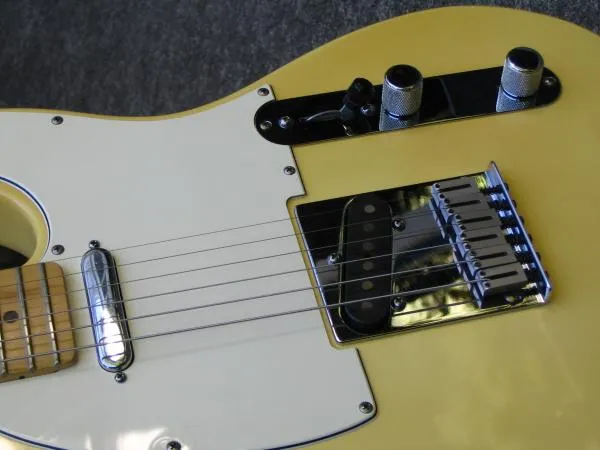
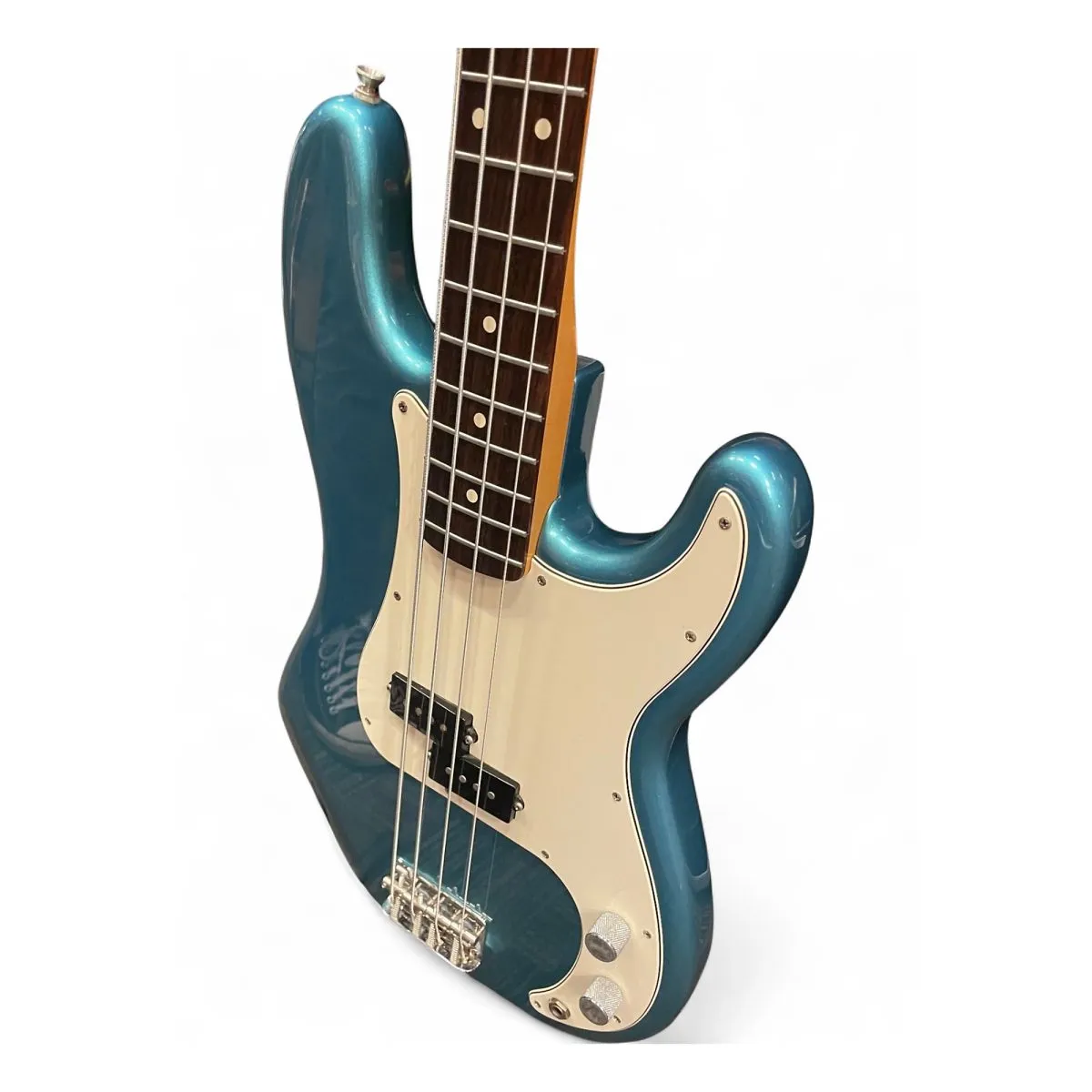
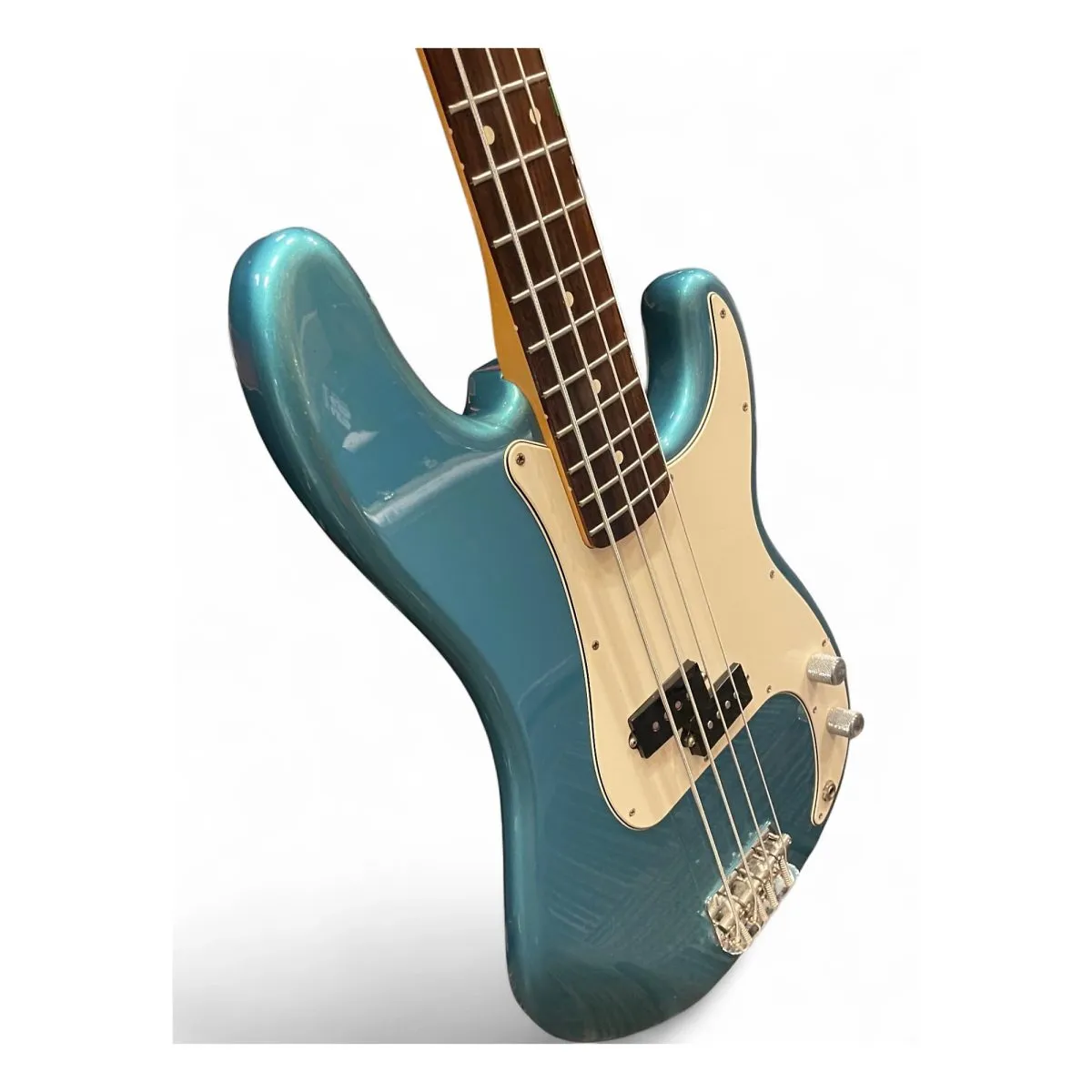
- This site has one of each. The 1990 Telecaster has a maple fretboard and the 2010 Precision Bass has rosewood.
What a fingerboard actually is
The fingerboard (or fretboard, same thing) is the strip of wood on the face of the neck that carries the frets. It is the part your fingers touch all night, which gives it a disproportionate share of the arguing. Fender notes that necks are almost always maple or mahogany, so when someone says “rosewood neck” they usually mean a rosewood fingerboard on a maple neck. Some necks are one piece of maple with the frets set straight into it, and others have a separate board glued on top.
That second case matters for tone talk: the board is bonded to the neck, so the two woods work as a unit. Yamaha’s bass guide makes the point with its signature models, noting that different board-and-neck combinations influence the sound in different ways. Pulling out one wood and crediting it with the whole sound is how most of the arguing starts.
Maple
Hard maple is dense, tight-grained and pale, anywhere from creamy white to yellow or light caramel. The Wood Database rates it at 1,450 lbf on the Janka scale (a measure of how hard it is to dent; higher is harder), which is firm under the fingers. Guitar World also credits its durability in hot, humid climates for its place on necks, which need to stay straight.
Maple has little natural oil, so it has to be sealed. Fender points out that maple boards are usually lacquered, which means the feel is the finish, not the wood. Gloss is slick and fast for some players and sticky for others (sweaty hands are the usual complaint); satin finishes are the common fix. When the finish wears through, Yamaha notes, the bare patches turn grey. According to Fender’s own history, that is the reason Leo Fender moved to rosewood in the first place (more on that below).
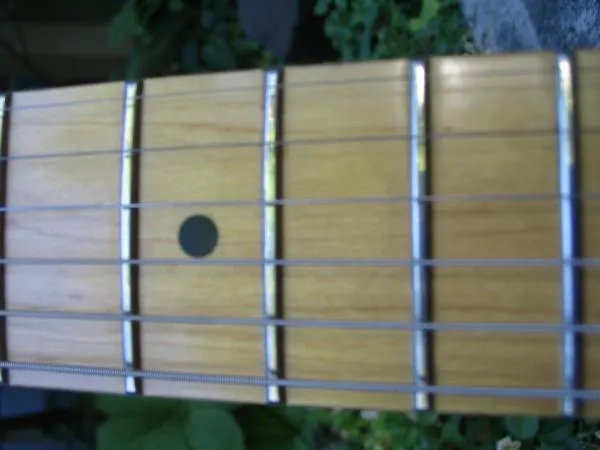
The archive’s Telecaster is the standard example. Its seller called it “pretty much your standard Fender maple neck,” noted a slightly yellowed, aged finish, and said the maple fretboard helps the characteristic country “spank” of the middle pickup position. That is a player’s impression, not a measurement, but it matches how Fender describes maple.
Roasted maple is maple baked to drive out moisture, and it turns a richer tan. Makers say it is more stable in humidity, and Balaguer adds that some people have measured a warmer, clearer attack (we could not find that testing, so file it under “claims”). The Sire Marcus Miller V7 Vintage bass is one place to see a roasted hard maple board (on some of its finishes) in finished form.
Rosewood
Rosewood is oily and open-grained, runs from nearly black to purplish brown and orange, and darkens with use. Fender says Indian rosewood is the favorite species and that the board needs no finish, so what your fingers meet is the raw wood. Fender’s product team puts it simply: it feels different because you are touching the wood itself. Yamaha calls rosewood the most popular choice for bass fingerboards, and the typical description is warm and rounded, with the harshest highs softened.
A small contradiction. Fender’s tonewood page calls rosewood “a bit softer than maple.” The Wood Database’s Janka figure for East Indian rosewood is 2,350 lbf against 1,450 for hard maple, which is the opposite way round. The likely reconciliation is that “soft” describes how an unfinished oily board feels, not how hard it tests, but nobody we read says so outright. Read the word “soft” accordingly.
The archive’s 2010 Mexican-made Precision Bass has a rosewood board on a satin-back maple neck, and the spotlight notes that Fender offered that bass with either wood.
How rosewood became the default (and then wasn’t)
According to Fender, rosewood fingerboards first appeared on the Jazzmaster in 1958 and were standard on every model within two years. After that, a maple neck was a special order. The folk explanation is that Leo Fender saw an all-maple neck on television around 1957, noticed the dark, grubby patches where the finish had worn off, and decided he didn’t care for them. Fender itself introduces this with the words “legend has it,” and so do we. A more practical reading from Fender’s own staff is that rosewood was widely available, needed no finishing and carried some prestige from high-end instruments. The warm tone and smooth feel were, in their words, probably happy accidents.
On the Precision Bass, our spotlight notes the glued-on rosewood board followed in 1959.
Then the law got involved. A 2016 CITES decision put the whole rosewood genus under international trade controls from January 2, 2017, and in May 2017 MusicRadar reported that Fender would move most Mexican-made and American Elite guitars and basses to pau ferro. In 2019 finished instruments were exempted (details below), and Fender later brought rosewood back on its Player II line after player feedback. One wood showed up, did the job for a few years, and was then replaced by the original, which is a rough career path for a substitute.
Does it sound different?
Fender says yes: maple is brighter and snappier, rosewood warmer with a little less top end and a bit more sustain. Yamaha says maple on a bass gives a very bright, sparkling sound with lots of sustain and rosewood mellows the highs. A guitar-store comparison will say the same, and so will half the internet.
Here is the honest part. We searched for a controlled blind test that changes only the fingerboard wood on an electric guitar and did not find one. What turns up is forum argument and retailer comparisons. Some of the effect people hear is probably the finish and feel, since glossy maple and bare rosewood are different surfaces under the fingertips, and some is the rest of the guitar: a bolt-on maple neck is a bolt-on maple neck whatever is glued to it, and the pickups are working on the strings either way.
None of this means the difference is imaginary. It means the evidence is mostly players and manufacturers saying so, and the safe test is the old one: play both and see which you want to keep picking up.
The woods side by side
Janka numbers are from The Wood Database; the “worth knowing” column leans on Fender, Yamaha and Balaguer. Hardness is not tone, and a harder wood is not automatically better, but it does tell you how a board will take string wear.
| Wood | Usual look | Janka (lbf) | Worth knowing |
|---|---|---|---|
| Hard maple | Near-white to cream, sometimes golden | 1,450 | Usually finished, so the feel is the finish; bright and snappy by reputation. Roasted maple is more stable. |
| East Indian rosewood | Golden to purplish brown with dark streaks; darkens with age | 2,350 | Oily, unfinished; warm by reputation. CITES Appendix II (genus-wide). Brazilian rosewood is far rarer and stricter. |
| Pau ferro | Reddish orange to violet-brown, dark streaks | 1,960 | Not on CITES. Yamaha’s writer hears it between rosewood and maple with a bit of snap. |
| Ebony (Macassar) | Yellow to reddish brown with dark stripes | 3,220 | The hard, smooth, fast one. Resists string wear. Macassar ebony is listed as vulnerable. |
| Jatoba | Light orange to reddish brown | 2,690 | Shows up on spec sheets, such as the Ibanez SR300E bass. Not on CITES. |
| Purpleheart (amaranth) | Eggplant purple when fresh, ages to dark brown | 2,520 | Harder than maple; makers call it stable. Used on boards and necks. |
| Bubinga | Pinkish red to reddish brown, dark streaks | 2,410 | Also called African rosewood. On CITES Appendix II. We found no bubinga fingerboards on sale. |
| Wenge | Medium brown, nearly black streaks | 1,930 | Very hard, very coarse texture. Listed as endangered. |
Laurel, cocobolo, walnut and the plastics (below) are not in the table because we did not look up trustworthy Janka figures for them.
The other woods, one paragraph each
Pau ferro got its big break from the rosewood rules. Yamaha’s bass writer calls it a suitable, inexpensive substitute that lands between rosewood and maple (with a “to my ear” caveat, so that is one opinion). It is the wood Fender used on its original Player line before going back to rosewood.
Ebony is the hard, smooth, premium option. Fender describes the feel as silky and fast, and Yamaha credits it with snappy highs and beefy lows and better resistance to string wear than most woods. Examples at zZounds include the Sire Marcus Miller V7 bass, the Ibanez JIVA10R Nita Strauss guitar and the EVH Wolfgang Special Ebony Fingerboard.
Laurel is Yamaha’s “great alternative to rosewood,” with a slightly more pronounced grain and similar tone. Squier uses it on a bass you can compare directly: the Classic Vibe ’60s Jazz Bass (laurel) sits beside the ’70s Jazz Bass (maple), which is as tidy a comparison as the shelf offers.
Jatoba is a tropical hardwood you will mostly meet in spec sheets. The Ibanez SR300E bass uses a jatoba fretboard on a maple and walnut neck.
Purpleheart, also sold as amaranth, really is purple, for a while: the Wood Database says it turns eggplant purple within days of being cut and then ages toward dark brown with a hint of purple, much like a dye job growing out. Balaguer calls it extremely stable and harder than maple. At zZounds the Sterling Intro Cutlass CT20HSS comes in finishes with an amaranth (purpleheart) board, and Ibanez builds necks of maple and purpleheart, including on the Nita Strauss guitar above.
Bubinga, sold as African rosewood, is dense and handsome, and it is on CITES Appendix II like rosewood. The Wood Database lists its uses as veneer, inlays, furniture, cabinetry and turnings, and a search of zZounds’ catalog on the day we wrote this found no bubinga fingerboards. That is about as far as we can responsibly go.
Wenge is very hard, dark and streaked, with a very coarse texture per the Wood Database, which also lists it as endangered. A maker says it is stable in laminated necks, and Yamaha describes it as a chic take on rosewood with an earthy tone. Care about the sourcing. Cocobolo is rosewood-like, oily and harder than ebony; Yamaha notes it dulls saw blades. Walnut is warm and pretty and, in Yamaha’s view, more of an aesthetic choice than a sonic one.
Synthetics (Richlite, phenolic, Ebanol and friends) are resin-bound composites. Yamaha says Ebanol looks and feels a lot like ebony, only smoother and harder, calls phenolic “maple-esque” with tight, pronounced highs, and notes that Richlite is often touted as a replacement for ebony. People who object to plastic should be advised that these are not exactly plastic, and people who object to them anyway will continue to.
Basses
Basses have their own wrinkle: heavier strings, longer scale, and a lot of players who use roundwound strings that grind a board down over time. Yamaha’s bass guide describes rosewood as the most popular choice for bass fingerboards (it is the standard on Yamaha’s BB series, such as the BB434), maple as very bright with lots of sustain, and ebony as the wood that handles wear best. It also stresses the combination: an all-maple bass is tight in the lows with growling mids, a rosewood board on a maple and mahogany neck sounds sweeter up high, and an ebony board adds snap.
That makes bass-shopping similar to guitar-shopping: the useful comparison is the same instrument with each board, and that is easier to find than it sounds. The Yamaha Pacifica is sold both ways, as the PAC112V (rosewood) and the PAC112VM (maple), and the Squier Classic Vibe ’50s Telecaster is a maple-board Tele for anyone who wants a cheaper cousin of the archive’s.
Rosewood and the law (the short, non-legal version)
Not legal advice. International wood rules have changed several times and may change again. Before you travel with, ship or sell an instrument across a border, check the current CITES text and your own country’s rules.
- 2 January 2017: the whole Dalbergia (rosewood) genus, except Brazilian rosewood, joined CITES Appendix II, along with several Guibourtia (bubinga) species, so trade in the wood and finished goods needed permits.
- 26 November 2019: after a vote in August, finished musical instruments, parts and accessories made with rosewood were exempted from CITES permits.
- Brazilian rosewood (Dalbergia nigra) was not part of that exemption. It has been under the strictest CITES listing, Appendix I, since 1992.
- We could not confirm from the sources we read whether the 2019 exemption wording also covers the bubinga species; a summary of CITES Secretariat documents suggests it does, but check before relying on it.
If you are choosing one
- Play it, preferably for longer than a minute. The wood is only part of the story; the finish, the neck profile and the radius matter at least as much.
- Check the finish. Gloss maple is slick and shows wear; satin is a common middle ground; bare rosewood has a different feel again.
- Budget for the exotic ones. Yamaha notes that ebony and cocobolo are expensive, and anything labeled with a long Latin name tends to be.
- Don’t pay extra for a tone you cannot hear. If you cannot tell the difference blindfolded, the cheaper board is not a compromise.
- Mind the paperwork if the instrument will cross a border, especially with older Brazilian rosewood.
For where the rest of a guitar’s identity comes from, see our guides to MIJ, MIM and MIA Fenders and Precision Bass vs Jazz Bass.
Sources
- A Description of Tonewoods — Fender Support
- The Return of Rosewood — Fender
- Back to Bassics: A Guide to Bass Fingerboards — Yamaha Hub
- Maple vs rosewood fretboards: what’s the difference? — Guitar World
- Wood Library — Balaguer Guitars
- Hard Maple — The Wood Database
- East Indian Rosewood — The Wood Database
- Pau Ferro — The Wood Database
- Macassar Ebony — The Wood Database
- Jatoba — The Wood Database
- Purpleheart — The Wood Database
- Bubinga — The Wood Database
- Wenge — The Wood Database
- Fender set to replace rosewood fretboards on Mexican-made and American Elite guitars and basses — MusicRadar (2017)
- Rosewood musical instruments exempted from requiring CITES permits — Taylor Guitars
- What the New CITES Exemptions on Rosewood Mean for the Guitar Industry — NAMM
- Understanding Rosewood Regulations — Antiques Roadshow (PBS)