The short version
- The Shure SM57 and SM58 are both rugged dynamic microphones with a cardioid pickup pattern. Shure says they share the same cartridge; the difference is the grille and where the diaphragm sits behind it.
- The SM58 has the ball grille with a built-in pop filter and is voiced for singing. The SM57 has a flat-faced grille, handles very loud sources, and is the default pick for a guitar cab or a snare.
- Both are used on the other job too. Plenty of people sing into an SM57, and an SM58 will happily sit in front of an amp.
- The usual step up or sideways is the Beta 57A, Beta 58A, Sennheiser e609 or e835. The SM58 is also one of the most copied mics there is, so read buying used before you buy one from a stranger.

Same capsule, different grille
Shure’s own FAQ on the pair says it plainly: they share a cartridge design. The SM58 adds a ball grille with a pop filter, designed for vocals. The SM57 has no ball grille or pop filter, and because its grille sits closer to the diaphragm, Shure says it shows more proximity effect when placed close and slightly more output above 5 kHz. Shure also says the SM57 was originally intended for instruments, while noting that it is often used on vocals anyway. Wikipedia adds that the SM57 uses the same capsule as the SM58 and that its grille allows closer placement to the source, which fits.
The rest of the family resemblance is mechanical: both use a pneumatic shock mount inside to cut handling noise, both are dynamic (moving-coil) mics that need no power, and both connect by XLR. The SM57 is listed at 284 g in the zZounds pack specs, and Thomann gives the same figure.
The SM57, in the retailers’ words
The SM57 at zZounds is sold with a warm hand. zZounds says no mic locker is complete without one, or five, and calls it one of the most popular mics in the world for capturing any vocal or instrumental source. Its copy for the SM57 centres on three claims: it handles extremely high sound pressure without distorting, it is often picked first for loud sources, and it is the most popular snare mic going, typically one on the top head and a second on the bottom with its phase reversed. For guitar, zZounds says to close-mic one of the amp’s 12-inch speakers for a clear, precise tone that cuts through a mix, and notes that studios often isolate a loud half-stack in its own room while the player listens on headphones.
Sweetwater’s product page goes further. It calls the SM57 the most popular dynamic mic on the planet and says a large share of the snare drums, guitar cabinets and vocal tracks recorded over the decades owe their sound to it. It credits a natural presence peak for clarity in vocals, snap on snares and bite from guitar amps, says many live stages use it as the default mic for everything, and points to its tight cardioid pattern for gain before feedback. The legends it cites, mics run over by trucks, dropped from buildings or buried for months, are marketing and we have not tested any of them. Its listing includes an MA25D clip, and Sweetwater also carries the e609 Silver in the same section. The page links a video on five easy ways to mic a guitar cab, which is worth watching before you start moving a mic around.
On the frequency curve the sources agree on the range, 40 Hz to 15 kHz, and describe the shape in slightly different ways. zZounds describes a gentle bass roll-off starting around 750 Hz, a flat stretch to about 3 kHz, and a lift between 6 and 10 kHz. Thomann describes bass filtered below 200 Hz, a lift around 2 to 6 kHz and dips near 7 and 8 kHz. Those are two retailers reading the same chart differently, so treat both as rough and look at Shure’s published curve if the exact shape matters to you. The zZounds specialist on the product page also repeats two bits of lore: that the White House uses two of them at the podium, and that Shure staff once dropped one from a seven-story window and it still worked. That is marketing, charming and unverified here. The podium part has a firmer source: Wikipedia says every US president since Lyndon Johnson has spoken through an SM57, and gives 1965 as its introduction.
Wikipedia also gives the name’s origin: SM stands for Studio Microphone. It reports the design leaned on the Unidyne III capsule that Shure engineer Ernie Seeler developed in 1959, and says the SM57 is manufactured in the United States, Mexico and China, which matters later when we get to fakes.
The SM58, in the retailers’ words
The SM58 at zZounds is sold as the go-to vocal mic. zZounds’ copy lists a brightened midrange that it says helps vocals cut through the mix, a built-in spherical filter that minimises pops and breath noise, the cardioid pattern for feedback control, and a shock mount against handling noise. It leans heavily on durability: it says the mic passed Shure’s drop test, ten drops from ten feet with no change in performance, and that the “tank-like” die-cast body and steel mesh grille have reached mythic status. The SM58/SM57 pack page calls it a world standard, and the SM58 page says the mic is priced so you can outfit a whole stage, with the cheeky suggestion that you use the savings to try to find something that performs as well.
Sweetwater’s page makes similar claims. It calls the SM58 the most popular vocal mic on the planet and says engineers there concur it will never let you down, crediting quality, consistency and durability. It says the tuned response cuts low-end rumble and adds an upper-mid presence peak that also suits guitar cabinets and brass, and that Shure builds the mic to tight standards so every SM58 sounds like an SM58, handy when you buy several. It lists the Unidyne III cartridge, the pneumatic shock mount and the built-in spherical pop filter, and repeats the truck, skyscraper and peat-bog durability stories. Sweetwater also says the mic has been in the spotlight for 60 years, which is the closest thing to a date any of our sources gives for the SM58.
The published figures: dynamic, cardioid, 50 Hz to 15 kHz, rated impedance 150 ohms (about 300 ohms actual), and an open-circuit output of about 0.19 mV. Shure’s page for the mic says its response is tailored for singing and speech, with the brightened midrange and reduced low end that give it its character. The break-resistant stand adapter swivels through 180 degrees.
Proximity effect and pickup patterns
Two terms come up in every mic description. Proximity effect is the bass boost a directional mic gives when the source is close to it. zZounds’ copy for the Beta 58A explains it this way: most dynamics get boomy up close, and a gradual low-end roll-off lets a singer use the effect to advantage. It is why the SM57 on a cab close to the grille sounds fuller than the same mic a metre back, and why the SM58’s bass roll-off makes it forgiving for a singer with their lips on the grille.
A cardioid pattern, which both the SM57 and SM58 use, picks up mostly from the front and rejects the rear. A supercardioid pattern, used by the Beta 57A, Beta 58A and Sennheiser e609, is narrower at the front and rejects the sides better, but has a small pickup lobe directly behind. zZounds’ Beta 58A copy puts it as better off-axis rejection and more gain before feedback, which is why supercardioid mics are popular on loud stages. The trade-off, which is the author’s reading and not a quote from any source, is that you have to aim them more carefully.
Miking a guitar cab
The classic recipe is one SM57, a few inches or less from the grille, pointed at the speaker cone. Thomann’s page notes that reviewers report classic tones with a 57 in front of a Marshall 4x12 or a Bassman, and suggests trying distance and off-axis position. It also points out that the low-end roll-off helps manage the proximity effect up close. The common convention, which is the author’s gloss rather than a cited source, is that the middle of the cone sounds brighter and the edge softer, so moving the mic a few inches sideways is the cheapest tone control you own.
Bass cabs are harder. The SM57’s published response starts at 40 Hz, and the open low string of a standard four-string bass is about 41 Hz while a five-string’s low B is about 31 Hz, so a 57 will not capture the bottom of that range on its own. Our Pro Co XLR cable listing says it was used as a DI-to-board line in a cover band, and a DI box is the usual way to take a bass to the board. The author’s opinion: use the mic for grit and the DI for weight. For volume levels and cab loads, see the speaker impedance guide.
The usual alternatives
Shure Beta 57A. The Beta 57A is a supercardioid dynamic with a neodymium magnet, a 50 Hz to 16 kHz response, a steel mesh grille and a pneumatic shock mount. zZounds lists it for drums, guitar amps, brass, woodwinds and vocals. Its spec sheet gives a rated impedance of 150 ohms (about 290 ohms actual). zZounds calls it high-output. Think of it as the SM57’s tighter cousin.
Shure Beta 58A. The Beta 58A is the SM58’s supercardioid counterpart. zZounds says it puts out about 4 dB more than the SM58 and extends the response to 50 Hz to 16 kHz, with an integrated windscreen, the same drop-test claim and a net weight of 278 g.
Sennheiser e609. The e609 Silver is a flat-faced supercardioid dynamic made for close-miking guitar cabs and toms. Its flat profile lets it sit against the grille or hang over the amp without a stand, and it has a hum-compensating coil. The sources disagree on its range: the zZounds page says 40 Hz to 18 kHz, while the Guitar Center spec table says 40 Hz to 15 kHz, and Guitar Center’s text also oddly mentions phantom power, which a dynamic mic does not need. Where a listing contradicts itself, check the maker’s sheet. How it compares with an SM57 is opinion, and the kind of thing you can only settle with your own amp.
Sennheiser e835. The e835 is a cardioid dynamic vocal mic, 40 Hz to 16 kHz, with a presence boost and a very high maximum SPL (150 dB per zZounds). Sennheiser’s own page stresses consistent tone at varying distance and off axis. It is the usual “I want a vocal mic that is not an SM58” pick, and there is an e835-S version with an on/off switch. In the other direction, the SM58 and SM57 pack bundles both Shures with XLR cables and a case, for equipping a band in one order.
The numbers side by side
| Mic | Pattern | Response | Impedance | Best known for |
|---|---|---|---|---|
| Shure SM57 | Cardioid | 40 Hz to 15 kHz | About 310 ohms output (Thomann) | Guitar cabs, snare, general instrument |
| Shure SM58 | Cardioid | 50 Hz to 15 kHz | 150 rated, about 300 actual | Live vocals |
| Shure Beta 57A | Supercardioid | 50 Hz to 16 kHz | 150 rated, about 290 actual | Drums, guitar cabs, vocals |
| Shure Beta 58A | Supercardioid | 50 Hz to 16 kHz | Not given in the sources we read | Vocals, hotter than the SM58 |
| Sennheiser e609 | Supercardioid | 40 Hz to 18 kHz, or 15 kHz (sources differ) | 350 ohms nominal | Close-miked guitar cabs and toms |
| Sennheiser e835 | Cardioid | 40 Hz to 16 kHz | 350 ohms nominal | Lead and backing vocals |
All of these are dynamic mics: they need no phantom power, unlike the condenser mics used in studios.
Buying one used, and fakes
The SM58 is among the most counterfeited microphones around, and fakes sell on the same marketplaces as the real thing. Sweetwater’s news archive records a 2005 case: Shure helped authorities in Thailand seize a container that included a large quantity of counterfeit SM58s bound for retail, and arrests followed. We could not read Shure’s own counterfeit guidance, so what follows is cautious general advice, not a forensic checklist.
- Price too good to be true usually is. If a new-looking mic is a fraction of the usual price, suspect it.
- Ask for photos of the grille, the engraved lettering and the XLR connector end, and compare them with photos on the maker’s page. Retailers and forums report differences in grille mesh, colours, labels and wiring, but those reports are anecdotal.
- Weight is a weak test. The SM57 is listed at 284 g and the Beta 58A at 278 g, but forums say weight alone does not separate real from fake.
- Genuine does not mean one country. The SM57 is made in more than one country, so a non-US origin is not itself a red flag.
- Check condition: dents in the body, a crushed or loose grille, bent connector pins, crackling when you flex the cable, and a mic that sounds thin or hums. Grilles and cartridges are sold as replacements, and a swapped grille may hide a wrecked mic.
- When in doubt, buy from an authorised dealer or ask the maker.
Searching used: SM58 on eBay, SM57 on eBay and SM57 on Reverb Sponsored link. We may earn a commission if you buy through it. Details. If you ship a mic, see our shipping guide: a mic is small but the grille dents.
The kit around the mic
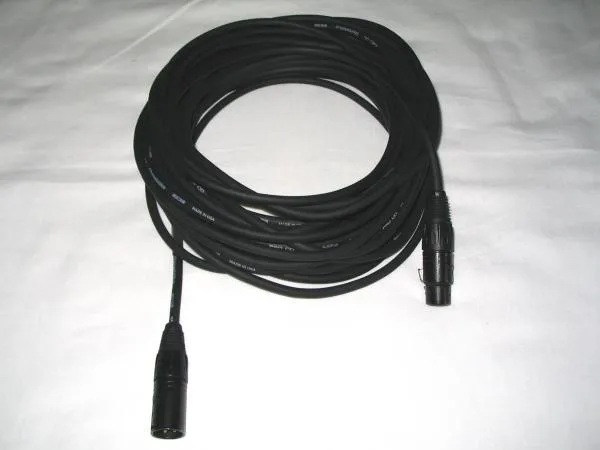
A mic is half of a signal chain. You need a balanced XLR cable, which is a different thing from an instrument cable or a speaker cable. Our own Pro Co 50-foot XLR cable listing shows one from our old archive, and you can find similar on eBay or Amazon. A boom stand is worth having for a cab; a round-base stand is fine on a drum riser. The SM57 comes with a clip and a zippered bag, and a windscreen or foam cover cuts pops if you use it for vocals.
Two warnings. A mic’s impedance, 150 to 350 ohms in the table above, is an electrical property of its output and has nothing to do with a speaker’s 4, 8 or 16 ohms; see the speaker impedance guide for that other number. And never plug an amp’s speaker output into a mic input or an XLR line; speaker leads belong with speaker connectors. For a gigging bag list, the gig bag checklist covers mic cables and spares.
Where to find mics and mic gear
| Looking for | eBay | Reverb | Amazon (similar) |
|---|---|---|---|
| Shure SM57 | eBay | Reverb Sponsored link. We may earn a commission if you buy through it. Details | Amazon |
| Shure SM58 | eBay | Reverb Sponsored link. We may earn a commission if you buy through it. Details | Amazon |
| Shure Beta 57A | eBay | Reverb Sponsored link. We may earn a commission if you buy through it. Details | Amazon |
| Shure Beta 58A | eBay | Reverb Sponsored link. We may earn a commission if you buy through it. Details | Amazon |
| Sennheiser e609 | eBay | Reverb Sponsored link. We may earn a commission if you buy through it. Details | Amazon |
| Sennheiser e835 | eBay | Reverb Sponsored link. We may earn a commission if you buy through it. Details | Amazon |
| XLR microphone cables | eBay | Reverb Sponsored link. We may earn a commission if you buy through it. Details | Amazon |
| Mic stands | eBay | Reverb Sponsored link. We may earn a commission if you buy through it. Details | Amazon |
| Mic clips and windscreens | eBay | Reverb Sponsored link. We may earn a commission if you buy through it. Details | Amazon |
The zZounds, eBay, Reverb and Amazon links are affiliate links (see our terms). zZounds and the other retailers describe the mics in marketing language; this guide separates their claims from the published numbers where it can.
Sources
- Shure SM57 Cardioid Dynamic Microphone: zZounds
- Shure SM58 Dynamic Handheld Microphone: zZounds
- Shure SM58 and SM57 Microphone Pack: zZounds
- Shure Beta 57A Microphone: zZounds
- Shure Beta 58A Microphone: zZounds
- Sennheiser e 609 Silver Guitar Mic: zZounds
- Sennheiser e835 Cardioid Dynamic Handheld Microphone: zZounds
- Shure SM58 Cardioid Dynamic Vocal Microphone: Sweetwater
- Shure Shuts Down Counterfeiters (2005): Sweetwater inSync
- Shure SM57 Cardioid Dynamic Instrument Microphone: Sweetwater
- SM57 product page: Shure
- SM58 product page: Shure
- What is the difference between the SM58 and the SM57? (FAQ): Shure
- e 835 product page: Sennheiser
- Shure SM 57 LC: Thomann
- Sennheiser e 609 Silver listing: Guitar Center
- Shure SM57: Wikipedia
Stock photos in this guide (credited in each caption) are provided by Pexels. Every other photo is our own.