The short version
- Impedance is the electrical load a speaker (or a group of speakers) puts on the amp, measured in ohms. Common values are 4, 8 and 16.
- Tube amps want the load set to match: put the amp’s impedance selector (or output jack) at the total impedance of your speakers. Do not guess, and never run a tube amp with no speaker connected.
- Solid-state amps state a minimum load. Higher is safe, lower is not. See solid-state.
- Two cabinets in parallel halve the load if they match (two 8-ohm cabs make 4 ohms). Wiring speakers in series adds their impedances. The table has the common cases.
- Use matching cabinets, real speaker cable, and check the amp’s rear panel or manual. Nothing here replaces the manual for your amp.
What impedance is
Guitar Center’s FAQ defines impedance as the measurement of resistance to electrical current flow in an alternating-current circuit, and describes a speaker’s impedance as its resistance to current flow from the amp. Measured in ohms (Ω), it comes out as the amp’s sense of how hard the speaker is to drive. A higher impedance lets less current flow and lowers the volume; a lower one lets more flow and raises it. Premier Guitar puts it the same way: most cabinets are 4, 8 or 16 ohms, and more ohms mean less power flowing to the speaker.
Two details trip people up. First, the number on the back of a cabinet is nominal: Guitar World says the impedance changes with frequency, and Eminence adds that a speaker’s DC resistance reads lower than its nominal rating (an 8-ohm speaker might measure roughly 5 to 8 ohms on a meter, a 4-ohm one roughly 2 to 4). So do not be alarmed when a multimeter gives a different number. Second, a load is anything the amp is powering: one speaker, a cabinet of four, or several cabinets chained together.
Why the number changes your power
Amp makers rate power at a given load. Premier Guitar’s example is a head that sends 200 watts into 8 ohms, 350 watts into 4 ohms and 600 into 2. A real example from our own side of the fence: Aguilar’s DB 751, which the maker calls the continuation of the DB 750 we featured, is listed at 975 watts at 2 ohms, 750 at 4 ohms and 400 at 8 ohms. So the output does not simply double each time the load halves; it depends on the amp’s design.
Guitar World makes a useful point about this: running an 8-ohm cab on an amp rated at, say, 500 watts at 4 ohms might give 250 to 350 watts, which sounds like a big loss but is less audible than it seems, because to sound twice as loud you need roughly ten times the power. That is the opinion of one writer and a rule of thumb, but it is a good reminder that picking the safe load matters more than chasing the lowest one.
Series and parallel: the arithmetic
Eminence’s rule: wiring in series adds impedances, and wiring in parallel divides them. For identical speakers or cabs in parallel, divide by the number of them. For two different ones, multiply and divide by the sum (4 ohm and 8 ohm: 4 × 8 ÷ 12 = 2.67 ohms). The figures below are our own arithmetic, cross-checked against Guitar World, Premier Guitar and Ampeg’s own “impedance divided by number of cabinets” rule.
| You have | Wired | Total load |
|---|---|---|
| One 8-ohm cab | Single | 8 ohms |
| Two 8-ohm cabs | Parallel (the normal way two cabs share an amp) | 4 ohms |
| Two 16-ohm cabs | Parallel | 8 ohms |
| Two 4-ohm cabs | Parallel | 2 ohms |
| Four 8-ohm cabs | Parallel | 2 ohms |
| Three 8-ohm cabs | Parallel | 2.67 ohms |
| One 4-ohm and one 8-ohm cab | Parallel (not recommended) | 2.67 ohms, with the 4-ohm cab getting twice the power |
| One 16-ohm and one 8-ohm cab | Parallel (not recommended) | 5.33 ohms, with the 8-ohm cab getting twice the power (Premier Guitar) |
| Two 4-ohm speakers | Series | 8 ohms |
| Two 8-ohm speakers | Series | 16 ohms |
| Four 16-ohm speakers | Series-parallel (the usual 4x12 wiring) | 16 ohms (Premier Guitar) |
| Four 8-ohm speakers | Series-parallel | 8 ohms (Premier Guitar notes some 4x12s are built this way) |
Premier Guitar notes that a typical 4x12 is 16 ohms, so two of them in parallel come to 8 ohms, which “most amplifiers on the planet can run.” Two 8-ohm cabinets come to 4 ohms, and you set the head to 4. Guitar World adds that on modern solid-state heads and cabs the sockets are wired in parallel, so it makes no difference whether you run a cable from the head to each cab or daisy-chain from one cab to the next.
Tube amps: match the load
A tube amp has an output transformer that is built, or tapped, for specific load impedances. Guitar Center’s FAQ says all-tube amps are designed for operation at a specific impedance load, and many have a switch for different setups, and that you should always run your tube amp with the proper impedance selected: an 8-ohm cab means 8 ohms on the switch, and two 8-ohm cabs together mean 4 ohms. Connecting the wrong load, it warns, results in compromised tone and power and risks damage to both the amp and the speakers. Guitar World adds that for an all-valve amp the specified impedance is effectively the maximum, and advises matching exactly. It also says that too low a load is worse than too high a one.
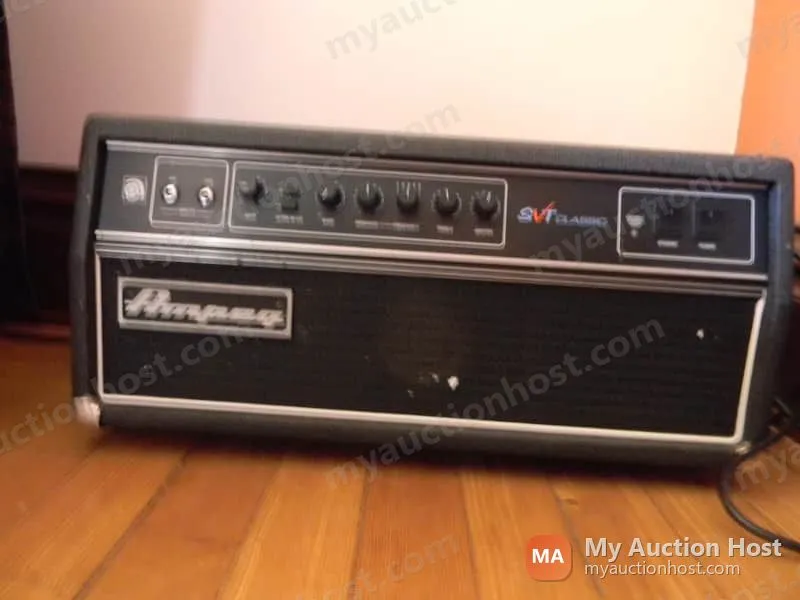
Ampeg’s own advice, for the SVT-CL we have featured, is a clean example. The SVT-CL’s output transformer is tapped for 2 and 4 ohms, and Ampeg says running it at 8 ohms is not recommended, because anything other than the nominal impedance can strain the transformer and the tubes and lead to premature failure. Running two 4-ohm cabinets is fine, with the switch on the 2-ohm position. For Ampeg’s V-4B head, which has separate jacks, the same logic is spelled out: speaker impedance divided by the number of cabinets gives the total load, and you use the jack for that load.
A widely repeated rule of thumb says a tube amp will tolerate a mismatch of up to a factor of two without harm. We could not find that in any maker’s documentation; it is forum lore, so treat it as folklore and not as permission, and Ampeg’s advice above is to stay at the rated impedance. And one rule is universal: never run a tube amp with no speaker connected. Amp makers generally warn about this, though we did not read a manual for each amp mentioned here. Tube power amps like the ones in our power tubes guide drive a transformer that needs somewhere for the power to go.
Solid-state amps: respect the minimum
Guitar Center’s FAQ says hybrid and solid-state amps (including PA power amps) tolerate a load higher than designated without ill effect, but a load below the minimum makes the amp overheat and trip its protection circuitry in the best case, or suffer severe damage in the worst. An amp with an 8-ohm minimum can drive 8 or 16 ohms, but not 4 or less. Guitar World describes the typical warning printed beside the speaker output: “4 ohms minimum.”
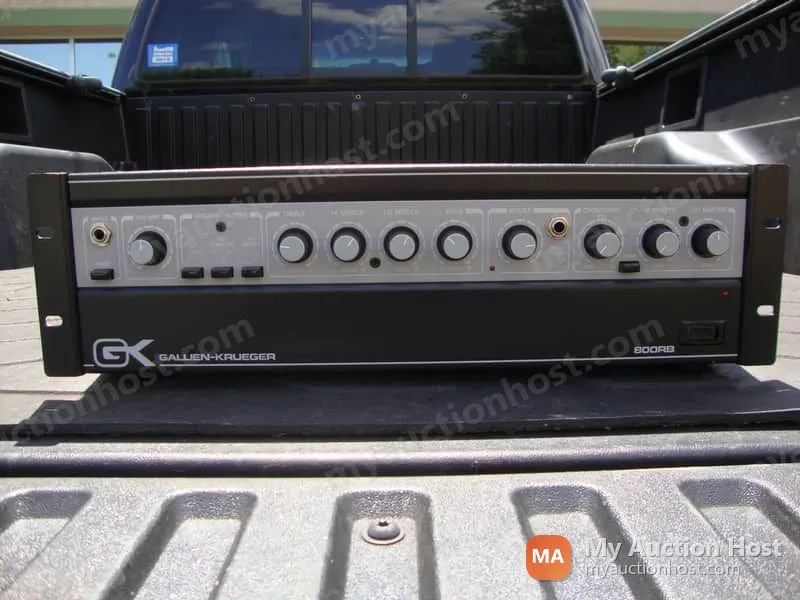
Ampeg’s knowledge base shows how specific these limits are. Its Micro VR head is rated for a minimum of 4 ohms, so an 8-ohm cab is fine. Its SVT-7Pro and SVT-3Pro are rated for a minimum of 4 ohms, so running two 4-ohm cabs (2 ohms) is not recommended and could lead to premature failure. And the SVT-4Pro’s two power amps can each handle 2 ohms, but its mono-bridge output is rated for 4 ohms only. The lesson is that bridged or mono modes often have a higher minimum than the normal outputs, so read the manual before bridging anything. Our sold Gallien-Krueger 800RB is the kind of head where that matters, and we could not read its manual, so we do not quote its limits.
Selector switches, jacks and extension speakers
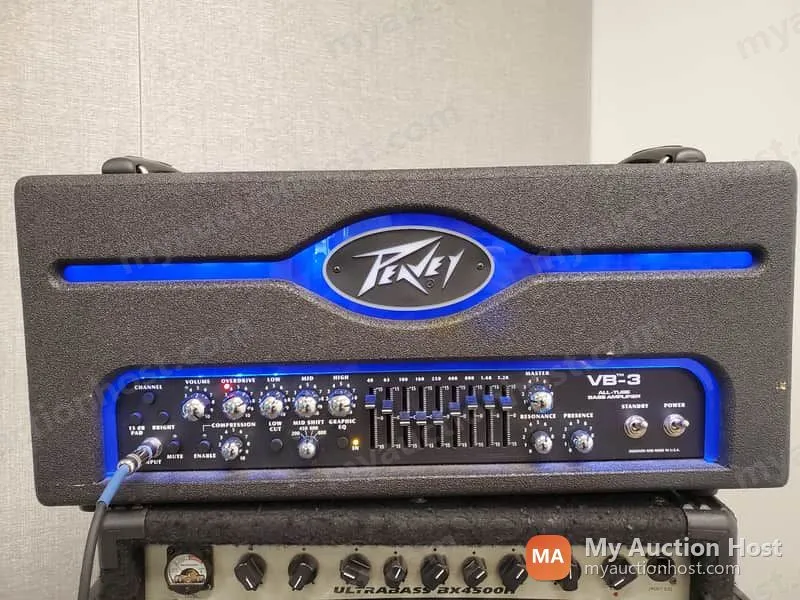
- Impedance selector switch. Set it to the total load of everything connected. The Peavey VB-3 has a 2, 4 or 8 ohm selector and is rated at 300 watts into each; the SVT-CL has 2 and 4. Your amp’s back panel and manual are the authority.
- Separate jacks by impedance. Some amps, like Ampeg’s V-4B, have an 8-ohm jack and 4-ohm jacks instead of a switch. Plug into the jack that matches the load.
- Extension speaker jacks. They add a speaker in parallel, or in some combos replace the internal one. On the Laney VC15-110 the extension socket disconnects the internal speaker and the manual states a minimum of 8 ohms, so you swap speakers, not add one.
- Head and cab together. The EVH LBX head offers 4, 8 or 16 ohms and EVH’s matching 4x12 is a 16-ohm cabinet, so a single 4x12 pairs with the 16-ohm setting.
Mixing cabinets and speakers
- Use matching impedances. Celestion says it is not advisable to mix speakers of different impedances in one cabinet, because power will not be shared evenly and it can sound terrible, affect the amp and damage the speakers; it advises matching extension cabs too. Premier Guitar says the same about cabinets.
- Unequal cabs share power unequally. In a parallel pair, the lower-impedance cab gets more of the power, as the table shows.
- Check power ratings too. A cabinet is rated in watts at its impedance; EVH, for example, rates its 4x12 at 100 watts at 16 ohms. An amp that makes more power than the cab is rated for is a way to blow speakers, so compare watts as well as ohms.
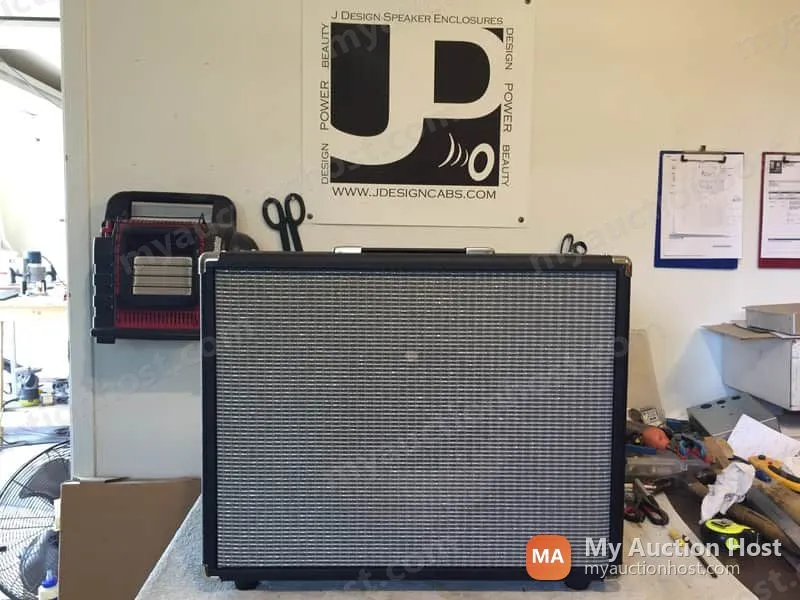
- No speaker means no impedance. Our J Design 1x12 cabinet was listed as a bare cabinet with a 1/4 inch jack and mounting hardware, with no speaker named. The speaker you fit decides its impedance, so you would need to read the speaker, not the box.
Cables and connectors
Premier Guitar is blunt about it: use speaker cables between a head and a cabinet. They are thicker and not shielded, and it recommends at least 16 or 18 gauge so you do not damage your rig. Instrument cables are thin and shielded for low-level signals, which is the opposite of what a speaker line needs. Our own order history has several Speakon-to-1/4-inch speaker cables (Pro Co and ProCraft) for exactly this. Our speaker wire terminations guide covers the connector side: pins, bananas and spades.
Common mistakes and what they look like
- Tube amp set to the wrong impedance. Tone and power suffer first; Guitar Center warns it risks damaging the amp and speakers, and Ampeg says it can strain the output transformer and tubes.
- Solid-state amp into too low a load. Overheating, then the protection circuit cutting out, or damage. If an amp keeps shutting itself off, check the load first.
- Bridging without reading the manual. The bridged minimum is often higher, as with the SVT-4Pro’s mono-bridge output.
- Mixing different cabinets. Uneven power sharing; see above.
- Instrument cable as speaker cable. Wrong gauge and shielding, and a way to overheat a cable and damage gear.
- Forgetting the load. No speaker connected, or an attenuator or extension jack left in a state you did not intend.
Amps and cabinets on this site
Here is what we could confirm for the amps and cabs we have featured. Where a maker’s page or manual was readable we say so; where it was not, we do not guess.
| Item | Load | Source |
|---|---|---|
| Ampeg SVT-CL Classic head | 300 watts into 2 or 4 ohms (selector). Ampeg says 8 ohms is not recommended | Ampeg owner’s manual and Ampeg’s knowledge base. See our Ampeg guide |
| Peavey VB-3 bass head | 300 watts into 2, 4 or 8 ohms, with a 2/4/8 selector | Peavey operating manual. See our Peavey guide |
| Laney VC15-110 combo | 10-inch 8-ohm speaker. Extension socket disconnects the internal speaker, minimum 8 ohms | Laney manual |
| EVH LBX head and 4x12 | Head: 15 watts, 4, 8 or 16 ohms. Cab: 16 ohms, 100 watts, four Celestion G12 EVH 20W speakers | EVH’s head and cabinet pages |
| Raven 8 attenuator | Listed as 8 ohm, 65 watt. It sits between a tube amp and its speaker, so it must match the amp’s load | Listing title; the maker’s page is stamiscustoms.com/raven |
| Aguilar DB 750 | Not confirmed for the DB 750. Its successor, the DB 751, is listed at 975 W at 2 ohms, 750 W at 4, 400 W at 8 | Aguilar’s DB 751 page |
| Mesa Boogie Subway D-350, Gallien-Krueger 400RB, GK 800RB | Not confirmed. Mesa’s page for it no longer loaded for us and we could not read the GK manuals. Check the rear panel and manual | None readable |
| J Design 1x12 cab | Depends on the speaker you fit; none named in the listing | Listing |
A short checklist before you plug in
- Read the rear panel: what load does the amp want, and is that a fixed number, a switch or a minimum?
- Read the cabinet: what is its impedance and power rating? Add up the total if you are chaining cabinets.
- Set a tube amp’s selector to the total. For solid-state, make sure the total is at or above the minimum.
- Use proper speaker cable, and plug in before you power up.
- Never power a tube amp with no speaker connected.
- If you are unsure, ask the maker or a tech. A question is cheaper than a new output transformer.
Where to find speaker cabs, cables and attenuators
| Looking for | eBay | Reverb | Amazon (similar) |
|---|---|---|---|
| Speaker cabinets (guitar) | eBay | Reverb Sponsored link. We may earn a commission if you buy through it. Details | Amazon |
| Bass speaker cabinets | eBay | Reverb Sponsored link. We may earn a commission if you buy through it. Details | Amazon |
| Speaker cables (Speakon and 1/4 inch) | eBay | Reverb Sponsored link. We may earn a commission if you buy through it. Details | Amazon |
| Speaker attenuators | eBay | Reverb Sponsored link. We may earn a commission if you buy through it. Details | Amazon |
| 4x12 cabinets | eBay | Reverb Sponsored link. We may earn a commission if you buy through it. Details | Amazon |
| 1x12 cabinets | eBay | Reverb Sponsored link. We may earn a commission if you buy through it. Details | Amazon |
| Amp load boxes | eBay | Reverb Sponsored link. We may earn a commission if you buy through it. Details | Amazon |
The eBay, Reverb and Amazon search links are affiliate links (see our terms). Used cabinets are a gamble on what is inside: ask for the speaker model, the impedance, the power rating and a photo of the rear panel and the speaker label.
Sources
- Impedance FAQ: Guitar Center
- Amp impedance explained: how to connect your amp head to your cabinet: Guitar World
- Speaker Geeks: Wiring Up a 4x12 Cab: Premier Guitar
- Heads Up When You're Hooking Up: Premier Guitar
- Can I use 8 and 16 ohm speakers in the same cabinet? (Dr Decibel): Celestion
- Wiring your speaker cabinet: Eminence
- Knowledge Base (SVT-CL, V-4B, SVT-4Pro, SVT-7Pro and Micro VR answers): Ampeg
- Ampeg SVT-CL owner's manual (reproduced): ManualsDir
- Peavey VB-3 operating manual (reproduced): ManualsLib
- Laney VC15-110 user manual (reproduced): ManualsDir
- 5150III 15W LBX Head: EVH
- 5150III 4x12 Cabinet: EVH
- DB 751 Bass Amp (successor to the DB 750): Aguilar
- Raven attenuator: Stami's Customs