The short version
- Power tubes are the big, hot tubes that drive the speaker. They wear out, and in a guitar or bass amp they are the part most likely to need replacing.
- The common types are 6L6, 6V6, EL34, EL84, KT66, KT88 and 6550. Each has a reputation, and the reputations are opinion. See the table.
- Whether you can just plug in new tubes depends on how the amp is biased. Cathode-biased amps are plug-and-play, adjustable fixed-bias amps need a bias check, and some fixed-bias amps need a specific grade of tube. See bias.
- Never swap one type for another without checking the amp. Matching, bias and the tube’s size all matter.
- An amp holds lethal voltage after it is unplugged. If you are not sure, take it to a tech. See safety.
What power tubes do
An amp’s preamp tubes (usually 12AX7s and friends) make the signal bigger and shape the tone. The power tubes then do the heavy lifting: they push enough current through the output transformer to move the speaker. Power tubes run much hotter than preamp tubes: Eurotubes says power and rectifier tubes can in some cases exceed a surface temperature of 350°F. That, and the work they do, is why they usually wear out sooner. For the small ones, see our preamp tubes guide.
The common power tubes
The “sound” column is retailer and gear-writer opinion. Sources disagree in places, and the amp, speaker and your hands matter more than the bottle. Eurotubes sells all of these types, including several variants (6V6S, 6L6GC, EL34, EL84, KT66, KT77, KT88, 6550, 5881 and others), so they are all still available new.
| Tube | Reputation (opinion) | Amps people name |
|---|---|---|
| 6L6 / 6L6GC | Big lows, tight, glassy highs, harder to push into breakup | Fender Bassman, Twin Reverb |
| 5881 | A ruggedised 6L6-type, with a little less low end and earlier breakup | Tweed Bassman |
| 6V6 | Smaller and breaks up easily. Writers disagree: “warm and sweet” to one, “less low end” to another | Champ, Princeton, Deluxe |
| EL34 / 6CA7 | Mid-forward crunch; the classic Marshall sound. 6CA7 is the American name and is said to have a little more headroom | Marshall |
| EL84 | Chimey and bright, breaks up early | Vox AC30, and the EVH LBX below |
| KT66 | Open and dynamic, slightly cleaner than a 6L6 | Marshall JTM45 |
| KT88 / 6550 | Clean, round, high headroom and rugged. Writers treat them as close cousins | Ampeg SVT, Hiwatt, big Marshalls |
Sources for the table: Premier Guitar’s power tube guide, Guitar Center’s guide and a hobbyist primer. The hobbyist could not verify manufacturing details for the KT77 and neither could we, so it is left out of the table.
Pairs, quads and matching
Most push-pull amps use two or four power tubes (the SVT-style heads use more). In an amp where every tube has its own bias adjustment, matching matters less. Where several tubes share one control, they need to behave alike. That is why power tubes are sold as matched pairs and quads.
- Eurotubes says its power tubes are matched into quads by hand, in real time, checked statically and then swept from the turn-on “knee” up to maximum dissipation, then noise- and leakage-tested. Every tube starts with a 24-hour factory burn-in, and it gives a six-month minimum warranty (Quality page).
- The Tube Store says it matches pairs to within 5% of measured plate current, which it calls tighter than the roughly 25% the industry accepted for decades (source).
- Ruby Tubes says it matches by plate current and transconductance (source).
Each seller describes its own method, so a “matched pair” from one is not the same promise as from another. Ask what was measured and at what conditions.
Bias, in plain English
Bias sets how much idle current flows through a power tube. More current means more heat in the tube; less means less (Eurotubes, What Is Biasing?). The right setting is a compromise between tone, headroom and tube life. How much of that you have to manage depends on how the amp does it:
| Amp type | What it means | New tubes? |
|---|---|---|
| Cathode (self) bias | A resistor sets the bias, and it largely corrects itself as a tube draws more current | Plug-and-play; Eurotubes suggests moderate to cooler tubes, since these amps often run tubes at or beyond their limit |
| Fixed (grid) bias, adjustable | A trimmer sets the bias voltage | Check and adjust the bias every time the power tubes are swapped |
| Fixed bias, not adjustable | No trimmer, so the tubes must land in the amp’s range | Needs the correct grade of tube, so tell the seller which amp |
Eurotubes lists amps with fixed, non-adjustable bias: virtually all Mesa Boogies, the Peavey 5150 and Classic series, Fender Pro and Blues Jr amps, the original Princeton, Traynor YCV amps before 2008, and the Marshall JTM30 and some Artist amps (Does My Amp Need To Be Biased?). It also says there is no industry standard for grading power tubes, so it cannot match grades from other vendors. If your amp is picky, buy the grade from one seller and keep using it.
An old Ampeg SVT is a good example of a bigger job: Eurotubes says original SVTs typically have two bias adjustments, one for each half of the power section, plus an output balance adjustment for the driver stage. See our Ampeg dating guide if you are working out which SVT you have.
Who should do it? A tech. Even retailers that explain biasing at length say not to bias the amp yourself if you are unsure, because it involves measuring inside a high-voltage amp (Andertons; Premier Guitar’s Ask Amp Man).
Class A, Class A/B and the marketing
Eurotubes says very few guitar amps are strictly Class A. An amp with one power tube is Class A by default (a Champ-style circuit). Many amps sold as Class A are really Class A/B, which is the most common design in guitar amps and is biased cooler. None of that stops them sounding great (Is My Amplifier Class A?). Treat “Class A” on a spec sheet as a description, not a promise.
Swapping one type for another
It is tempting: a 6L6 for a 6V6, a KT88 for a 6550. Sources are cautious, and so are we.
- Same type, same rating: usually no rebias. Anything else, see a tech. This rule is attributed to Groove Tubes in a Fender-hosted article we could only read in search results, so treat it as unconfirmed.
- 6L6 for 6V6: circuit-dependent, and may need changes to resistors and a suitable transformer, per Mojotone’s tech FAQ. Do not just plug it in.
- KT66 for 6L6: often called interchangeable, but a KT66 draws more current and its larger bottle may not fit, per Guitar Center’s guide.
- KT88 for 6550: reported as interchangeable by Guitar Center. One forum post says an SVT needed resistor changes, which is an anecdote, not a rule. Tung-Sol markets its KT120 as a drop-in for 6550 and KT88 amps, which is a marketing claim.
- EL84: a nine-pin base, not octal, so it cannot share a socket with the others.
How long they last, and how they fail
Sources give very different life figures, so here they are side by side rather than blended:
| Source | What it says |
|---|---|
| Eurotubes | About 500 to 1,000 hours of useable life in a guitar amp, where tubes are pushed into clipping, sit next to speakers and often run beyond their ratings. The same tubes can exceed 3,000 to 4,000 hours in hi-fi |
| Ruby Tubes | Gigging players should expect to replace power tubes every year or two |
| Guitar Center’s guide | New tubes take roughly 40 to 80 hours to sound their best |
Signs a power tube is on its way out, per Eurotubes’ failure guide and The Tube Store:
- Cold while the amp is on and warmed up: Eurotubes calls this a good sign the heater has failed. Compare it with the others by eye, or by holding your hand near, and only handle tubes with the amp off and cool.
- Noise: rustling, crackling, swirling or random volume changes. Hum can come from a tube with poor heater-to-cathode insulation, or from badly mismatched tubes.
- Red-glowing plates, even at proper bias: the tube is failing. This can blow fuses.
- White, chalky getter where the inside of the glass used to be silver: the vacuum is gone.
- Rattle or ghost notes on low notes: a microphonic tube.
- Gradual loss of power, headroom and low end: the cathode emission is fading. Sources note this is not diagnostic on its own.
Not every glow is bad. Eurotubes says a blue beam against the inside of the glass in a power tube is usually harmless and can pulse with the signal under heavy load, while pink or purple glows (except in some rectifier and regulator tubes) indicate a faulty tube. Sources disagree on hum: Mojotone says hum alone does not mean a power tube has failed, while a search summary we could not trace links red plating to hum. Do not diagnose by hum alone.
Changing tubes the careful way
Eurotubes’ care and handling page says:
- Gloves are not needed: tubes are designed to be handled with clean, bare hands.
- Tubes push and pull straight out of the socket. If needed, rock them gently, no more than 10 to 15 degrees, or you can snap an octal guide pin or crack a nine-pin tube’s glass.
- Cup a hand over a power tube when pulling it, so it does not smack the cabinet when it lets go.
- Dirty sockets cause crackle, volume changes and even red plating. Working the tube in and out a couple of times scrapes a clean contact, and Eurotubes prefers a little electronics contact cleaner on the pins (it names CAIG DeoxIT D5). Our DeoxIT guide covers what to use and what not to spray.
Safety, in capital letters
- A tube amp keeps lethal voltage after it is unplugged, and capacitors can hold a charge for a long time. Eurotubes says to unplug and fully discharge an amp before touching socket terminals, and, if you check, to measure DC from the socket terminals to chassis ground and continue only once it is down to a volt or two. Many vintage amps do not bleed down by themselves.
- Wrong bias can damage tubes and parts and, according to Andertons, create a fire risk.
- Tubes are hot. Let the amp cool first. (None of the pages we read said this outright, but Eurotubes puts power tube surface temperatures above 350°F.)
- If you are not comfortable inside an amp, do not open it. A tech visit is cheap compared with the alternative.
Tube amps on this site
Several tube amps have passed through our archive. Tube counts below come from the maker where it said so and otherwise from retailer listings, which we mark. Maker pages were not all reachable, so check your own amp’s manual before ordering tubes.
| Amp | Power tubes | Source |
|---|---|---|
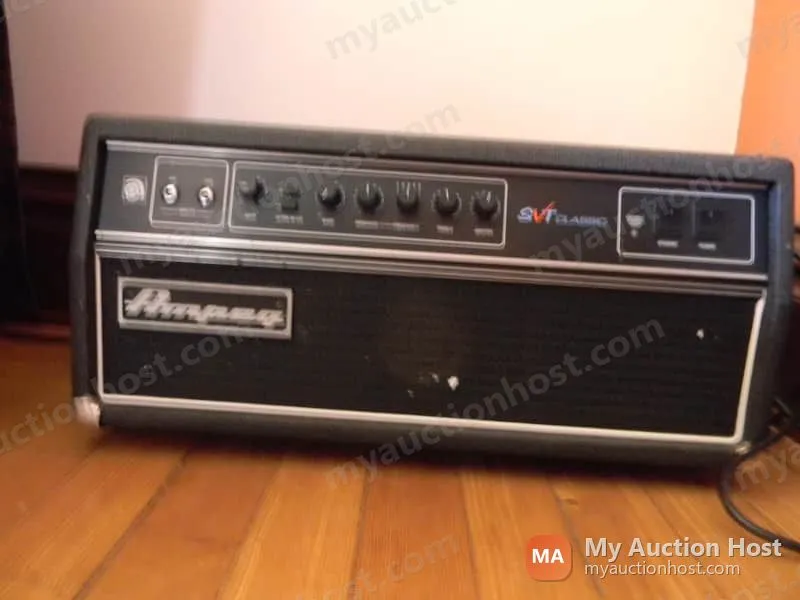
| Ampeg SVT-CL Classic head | Six 6550s, with 12AX7s and 12AU7s in the preamp and driver stages | Ampeg itself says all-tube with a user-adjustable bias circuit; the tube counts are from retailer listings (Ampeg, zZounds) |
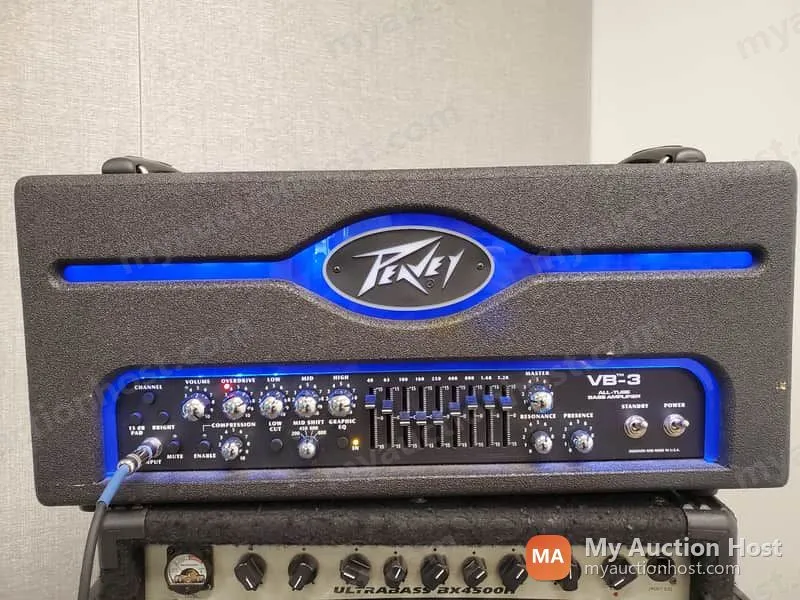
| Peavey VB-3 bass head | Peavey describes a 300-watt all-tube head (no longer made, though Peavey’s resources for it are still online) with a matched octet of eight EL34s, plus three 12AX7 and two 12AT7 preamp tubes. Reviews mention an internal bias switch for 6L6GCs | Peavey's Winter NAMM announcement; bias switch from No Treble. See our Peavey guide |
| Laney VC15-110 (and a second one) | Two EL84s, with three 12AX7s in the preamp | Retailer listings (zZounds); the VC15 is no longer made, and Laney’s own site no longer lists it. One listing says single channel, most say two |
| EVH LBX 15 W head | Two JJ EL84s, with five JJ ECC83S (12AX7) preamp tubes (the LBX-S variant reportedly uses four and has a bias control port) | EVH’s own product page (evhgear.com); the LBX-S detail comes from search results |
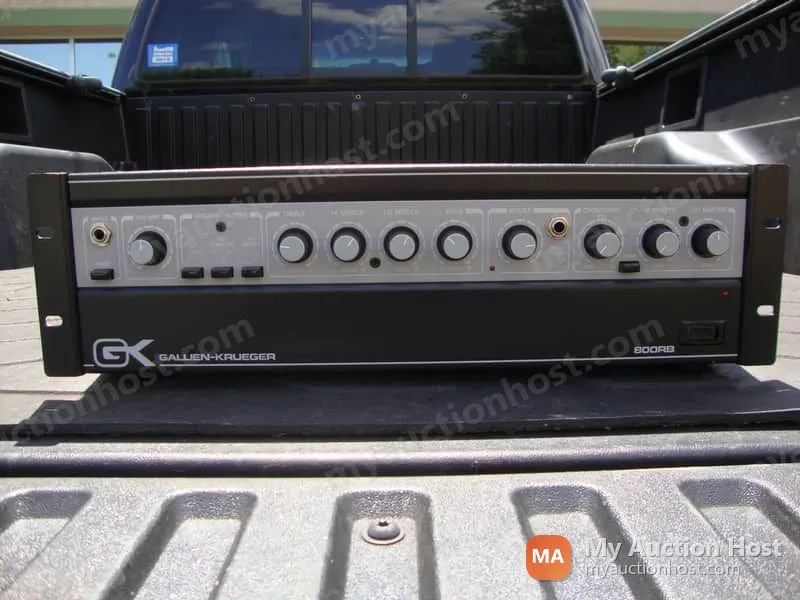
Our order history also includes a Tung-Sol tube upgrade kit for Jet City 20H and 20HV amps (listed with EL84 and 12AX7 tubes, bought in 2017), and a 2026 Stami’s Customs Raven 8 attenuator. The maker describes it as a passive speaker attenuator for low to mid wattage tube amps, which sits between the amp and the speaker, and warns against heavy attenuation for long periods with amps over 65 W (maker’s page). A tube amp is not the only way to a big bass sound either: the Gallien-Krueger 800RB we sold is a solid-state head, so no power tubes to worry about. The 2005 archive has the small tubes covered: a lot of 12AT7, 12AX7 and 12AU7 preamp tubes.
Where to buy, and what to ask
Eurotubes (Milwaukie, Oregon) is the one we leaned on most for this guide, because it publishes how it tests and grades and what it knows about amps. Others to compare: The Tube Store, Ruby Tubes, Tube Depot, Groove Tubes, Mojotone and Antique Electronic Supply. Questions worth asking any seller:
- Which exact type does my amp need, and does it need matched tubes? Check the manual.
- What was measured to match them, and at what operating point?
- Is the grade or rating suited to my amp’s bias? Rating systems are each seller’s own: Groove Tubes uses a 1–10 scale grouped as low, medium and high, and Tube Depot has its own “bias point” rating, but we could not read either seller’s explanation, so check how each defines it.
- What is the warranty? Eurotubes and Ruby Tubes both say six months.
Relabelling is the usual worry. Forum posters say some brands are relabelled from other makers, and one says unbranded tubes turned up in an EVH amp, but those are anecdotes. We found no manufacturer’s counterfeit warning, so the practical advice is to buy from a seller that tests and stands behind what it sells.
| Looking for | eBay | Reverb | Amazon |
|---|---|---|---|
| 6L6GC matched pair | eBay | Reverb Sponsored link. We may earn a commission if you buy through it, at no extra cost to you. Details | Amazon |
| EL34 matched pair | eBay | Reverb Sponsored link. We may earn a commission if you buy through it, at no extra cost to you. Details | Amazon |
| EL84 power tubes | eBay | Reverb Sponsored link. We may earn a commission if you buy through it, at no extra cost to you. Details | Amazon |
| 6550 matched quad | eBay | Reverb Sponsored link. We may earn a commission if you buy through it, at no extra cost to you. Details | Amazon |
| KT88 power tubes | eBay | Reverb Sponsored link. We may earn a commission if you buy through it, at no extra cost to you. Details | Amazon |
| 6V6 power tubes | eBay | Reverb Sponsored link. We may earn a commission if you buy through it, at no extra cost to you. Details | Amazon |
| Tube bias probe | eBay | Reverb Sponsored link. We may earn a commission if you buy through it, at no extra cost to you. Details | Amazon |
The eBay, Reverb and Amazon search links are affiliate links (see our terms). Brand names belong to their owners; we are not affiliated with any tube maker or seller named here.
Sources
- FAQ: Eurotubes
- What Is Biasing? (FAQ #4): Eurotubes
- Does My Amp Need To Be Biased? (FAQ #5): Eurotubes
- Is My Amplifier Class A? (FAQ #6): Eurotubes
- Modes of Failure and Symptoms (FAQ #7): Eurotubes
- How Hot Should My Tubes Run? (FAQ #3): Eurotubes
- Tube Changing, Care, and Handling (FAQ #1): Eurotubes
- Quality (testing, matching, warranty): Eurotubes
- Power Trip: A Guide to Power Tubes and Their Signature Sounds: Premier Guitar
- Guitar Amplifier Power Tube Guide: Guitar Center
- A Brief Hobbyist Primer on Key Power Amp Tubes: GuitarPedalX
- Power Tube Matching: The Tube Store
- How to Tell if Your Tube Is Bad: The Tube Store
- What is Tube Amp Bias?: Andertons
- How to Bias Your Tubes (Ask Amp Man): Premier Guitar
- Amp Tech FAQ: Mojotone
- Ruby Tubes
- Tung-Sol
- Classic Series all-tube bass heads (SVT-CL): Ampeg
- Ampeg SVT-CL Classic Bass Amplifier Head: zZounds
- Peavey VB-3 announcement: Peavey
- Peavey VB-3 review: No Treble
- Laney VC15-110: zZounds
- EVH 5150III 15W LBX head: EVH
- Raven attenuator: Stami's Customs