The short version
- DeoxIT is a family, not one can. CAIG sorts it into cleaners (D-Series), a gentle plated-metal finisher (Gold), a pure protectant (Shield) and a lubricant for sliding and carbon controls (Fader). The red can on most benches is D5.
- For a crackly volume or tone pot, CAIG’s own advice is a quick spray, rotate the control several times, then another quick spray. A little goes a long way.
- CAIG says to use a thin layer, always. More does not clean more; it mostly drips.
- The standard D5 spray is flammable until the solvent evaporates. Unplug, switch off, and wait.
- No spray revives a worn-out pot. CAIG says so itself. At that point a new pot costs a few dollars and ends the argument.
What it actually is
DeoxIT is made by CAIG Laboratories, which says it has been at this since 1956. In plain terms it is a cleaner-and-lubricant for the metal surfaces where electricity has to hop from one part to another: jacks, switch contacts, the wiper inside a pot, pins, sockets. Oxidation and corrosion on those surfaces add resistance and noise, which is where the crackle, dropouts and “it only works if I wiggle the cable” come from. DeoxIT dissolves the film, then leaves a very thin protective layer behind.
The popular sprays come as a mix of 5% active ingredient, a carrier solvent and a propellant. CAIG’s own summary of the standard 5% spray is 5% DeoxIT, 75% odorless mineral spirits and 20% propellant. Because most of what leaves the can is solvent, it flushes dirt and then evaporates, leaving the thin layer.
Which one do you want?
CAIG’s technical sheet puts it in cleaning-action terms. The numbers are the maker’s own, so take them as a ranking, not a lab result.
| Product | Cleaning action (CAIG) | What it is for |
|---|---|---|
| D5 spray | About 20% | The general purpose one. Visible discoloration counts as “severe” to CAIG, so use it first on anything that looks tarnished. Flushing action, plastic safe. |
| D100 spray | Same active ingredient, no solvent (20% active, 80% propellant) | Metered one-shot bursts with nothing to evaporate. CAIG suggests it where maximum lubrication is wanted but solvent is not, such as over-spray that might touch sensitive plastics. |
| Gold | About 0.5% | For gold-plated and precious-metal contacts and critical, low-current connections. A finishing step after D-Series, or on its own if the surface already looks clean. |
| Shield | 0% | A sealer for clean metal, usually applied after D-Series. It does no cleaning, so do not skip the cleaning first. |
| Fader (F5) | Lubricant first | CAIG describes it as a precision lubricant for conductive-plastic and carbon-compound faders, switches and similar parts. Think stiff or scratchy sliders. |
If you only want one can for guitar and bass work, CAIG’s answers to guitar-playing readers point to the D-Series, so D5 is the usual pick. If you want a small collection to start with, CAIG also sells a care kit; zZounds lists the DG100L-2DB equipment care kit.
A note on the non-flammable “DN5” spray: it swaps the mineral-spirits carrier for a quick-dry one that does not drip. In a Q&A answer, CAIG’s "Dr. DeoxIT" says personally preferring it on pots for that reason, and CAIG lists it among the sprays suited to energized equipment. We did not find it listed at zZounds.
What it goes on
- Pots (volume, tone): the classic job. See the next section.
- Switches: pickup selectors, mini toggles, push-pull pots. A quick spray into the switch body, work it back and forth several times, wipe the excess.
- Jacks and plugs: spray the plug tip, not the jack, and push it in and out a few times. That is practitioner advice rather than CAIG instruction, and the logic is simple: most of what you spray into a jack ends up somewhere else.
- Connectors and sockets: CAIG says its D-Series is for lower-voltage contacts, under 10 amps, and mentions plugs and sockets. For a socket it suggests a pen or oiler, not a spray.
- Tube sockets: a common use among amp techs, but we did not find a CAIG how-to for it, so treat that as forum territory and unplug the amp first.
- Sliding controls: Fader (F5), not D5.
Cleaning a crackly pot
Fender’s own care article starts in the right place: sometimes just turning the knob or working the switch back and forth a few times clears the connection. If it does not, it suggests a chemical cleaner, naming DeoxIT as probably the most popular, and adds that a pot or switch should be replaced once it has deteriorated too far. CAIG’s Q&A answers and Sound On Sound fill in the rest.
- Power off and unplug. A guitar is battery-free, but an active bass is not, so disconnect the battery. CAIG says the standard spray is not for energized circuits, and its advice is to wait two minutes before switching things back on.
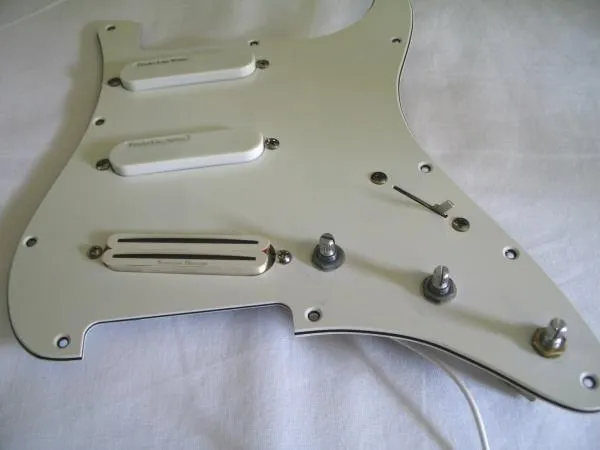
- Get at the pot. On a Stratocaster that usually means taking off the pickguard (TalkBass members warn that a cold aerosol can damage a finish, and it is a solvent anyway). Fender suggests wrapping or covering the surrounding area with a paper towel to catch overspray, and not inhaling the stuff. Protect the finish the same way.
- Aim for the back, with the straw. Sound On Sound’s advice is to spray where the lugs come out of the casing, not down the shaft, which is sealed. Forum posts disagree, but the back is less likely to put it in the wrong place.
- One quick spray, rotate, one more. That is CAIG’s own sequence for a Strat volume control. Rotate the control through its full travel several times; it often cleans by itself.
- Wipe and wait. The solvent clears in a couple of minutes (CAIG says 2 to 3). Wipe off drips with a lint-free cloth.
- Test it, then close it up. If it is still noisy, a second try is fine. After that, think about the pot.
Less is more. CAIG’s instruction is a thin layer, and the 100% spray has a metered valve that fires short bursts for exactly that reason. Soaking a pot is not the goal.
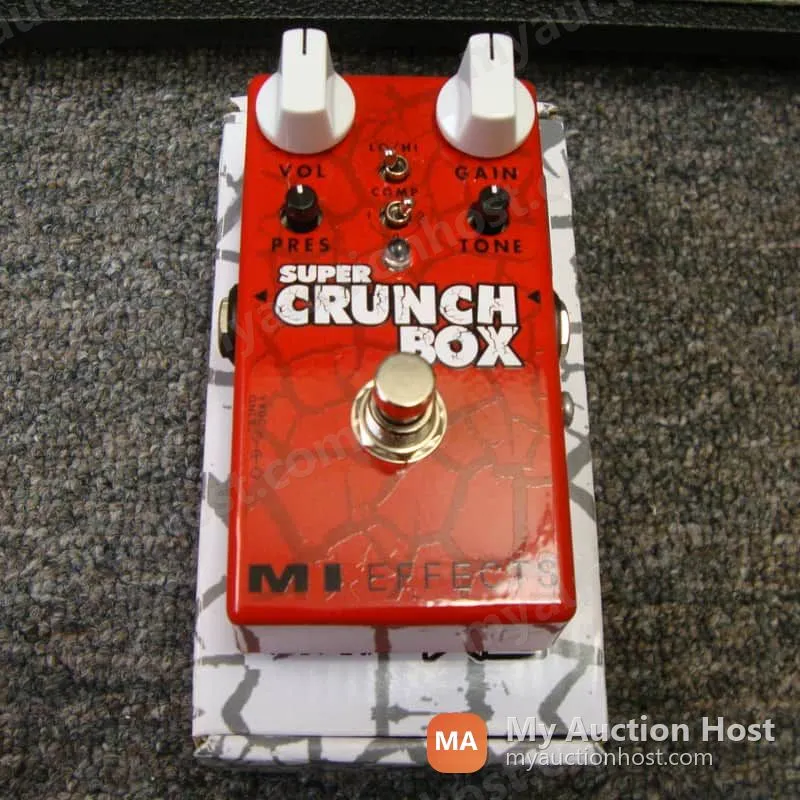
A real-world data point from our own archive: the seller of the MI Audio Super Crunch Box wrote that he sprayed a scratchy Gain pot with CAIG cleaner, as he had done on dozens of pots before. It spoiled the feel of the pot and did not clear the scratch. The maker later replaced both pots under warranty, and the scratchiness came back anyway. That is one pedal and one person’s account, not a test, but it fits CAIG’s own point that a part that has degraded will not be fixed by any product, and that a short spray is the limit of what cleaner can do.
The carbon pot argument
Search any guitar forum and you will find someone who says DeoxIT damages carbon pots, and someone else who says the opposite. CAIG has published a notice titled DeoxIT D5 does NOT damage carbon potentiometers, crediting a repair shop for a video that tested it. Its line: products are used on audio equipment for decades, but if a part has started to degrade, is damaged mechanically or has a design flaw, “no product will fix this.”
That is a vendor’s statement. Forum members, on TalkBass and audio-repair sites, include people who prefer Fader lubricant for old carbon pots and people who report no trouble from D5. We would summarize it as: CAIG says D5 is fine, some technicians are cautious on very old pots, and a worn carbon track is a replacement job either way. Sound On Sound makes the same point from the other side, noting that the worn carbon of a tired pot can mix with spray into sludge.
What not to use it on
- Windings. CAIG says solvents and even DeoxIT can soften the varnish between wires in motors and similar coils and short them out. CAIG’s example is motors; pickups are also coils of varnished wire, so our own advice is to keep it off them too.
- Live circuits (with the flammable spray), and anything you are going to power up within the two minutes.
- Rosin flux removal. CAIG says it is not recommended for that.
- Capacitor microphone capsules. Sound On Sound’s answer says to keep it away.
- Finishes. It is a solvent. Mask the guitar, and spray into the cavity.
- Old plastic, if you are unsure. CAIG calls its sprays plastic safe, then adds a test-first note for vintage gear with aging ABS.
How often, and what else
CAIG’s guidance on re-treatment is a range: a clean indoor room can go ten years or more, an average environment five, humid or coastal air about two, and polluted air about one. For a guitar case in a dry closet that is rarely, and for a gigging bass it is whenever the noise comes back. If you are chasing other signal-path noise, our guides to what to pack in a gig bag and the Fender TBX tone control cover the neighbours.
Some pot trouble is not dirt at all: a pot with a cracked track, a loose nut or a broken lug will not clean up. A pickup swap is a fine time to test every control with the pickguard already off, which is when this whole business is easiest.
Sources
- Cleaning Pots and Switches — Fender (Jeff Owens)
- Directions for Use: DeoxIT D-Series, Gold G-Series and Shield S-Series (technical info) — CAIG Laboratories
- CAIG DeoxIT D5 does NOT damage carbon potentiometers (notice) — CAIG Laboratories
- WARNING: Alcohol / Ethanol are conductive — CAIG Laboratories
- Fixing a volume control on a Fender Stratocaster? — CAIG Q&A
- Volume pots: which DeoxIT product do I use? — CAIG Q&A
- What to use on audio switches and encoders — CAIG Q&A
- Q. Can I spray-lube my crackly pots? — Sound On Sound (2008)
- Using DeoxIT (forum thread; practitioner opinion) — TalkBass
- Safest potentiometer cleaner (forum thread; practitioner opinion) — TalkBass