About the pedal
Background we added from archived reference pages (listed under Sources below). The seller’s own listing text follows.
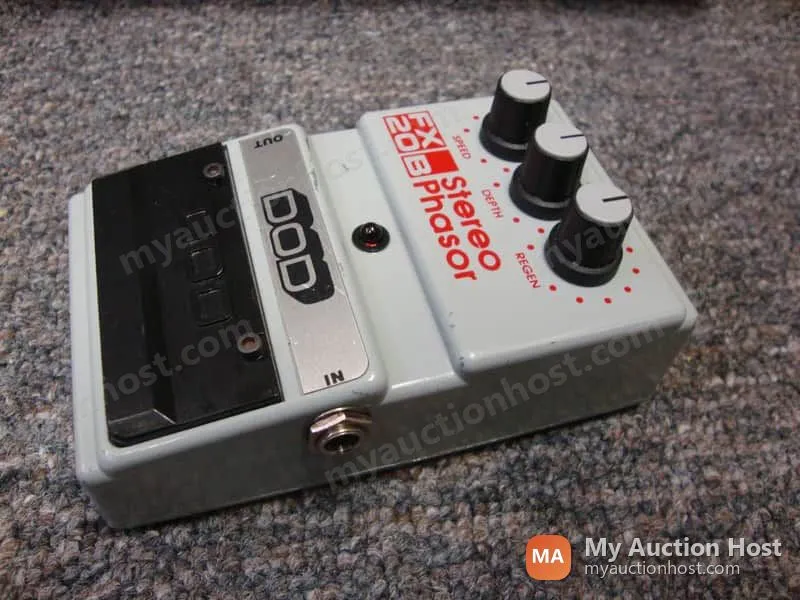
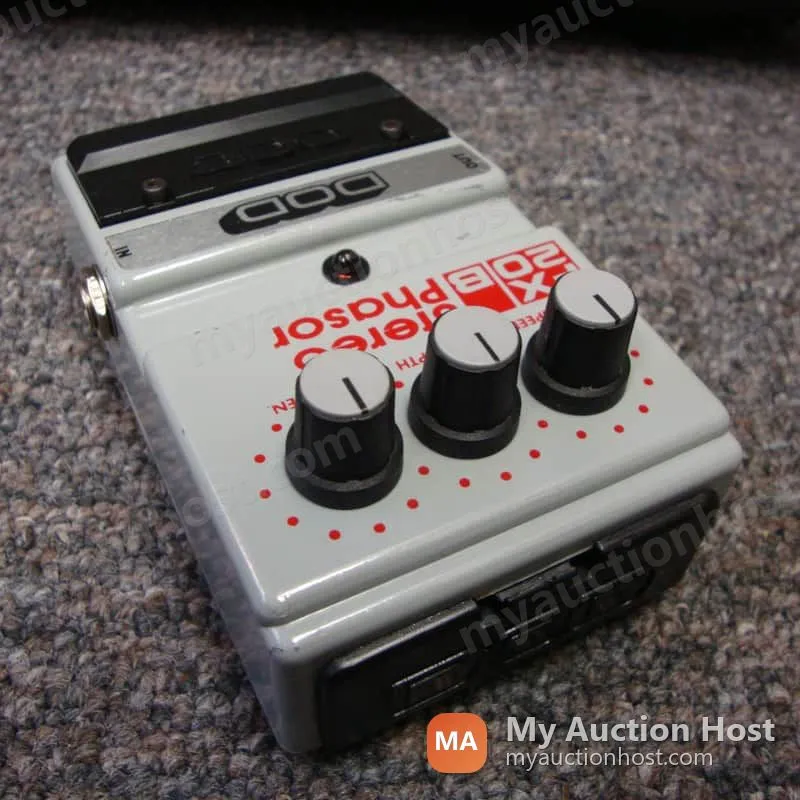
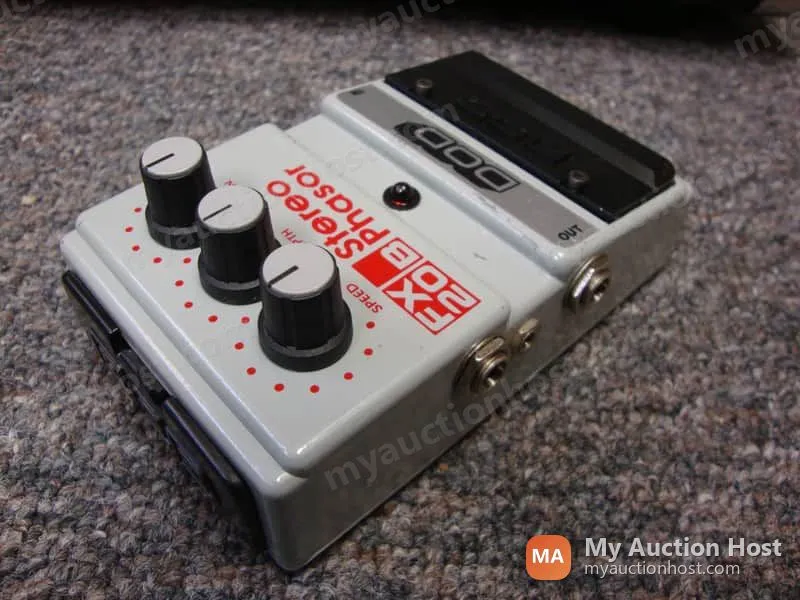
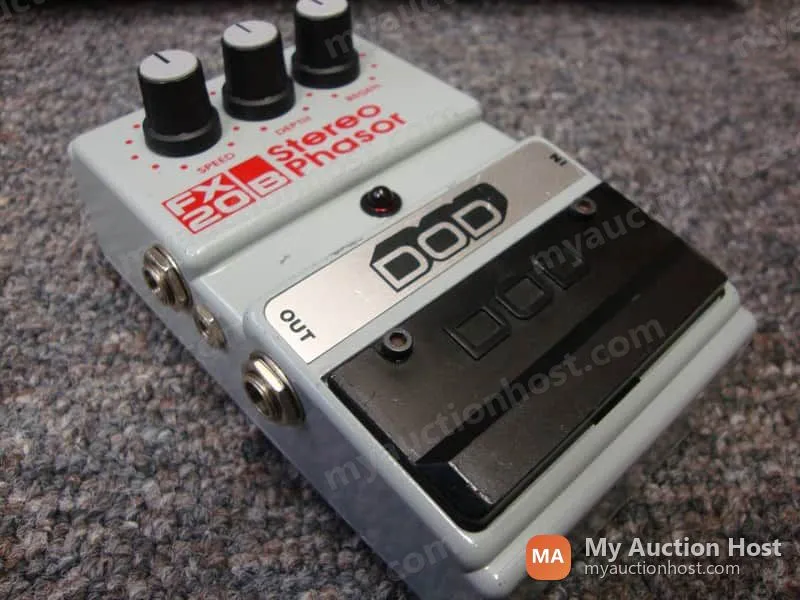
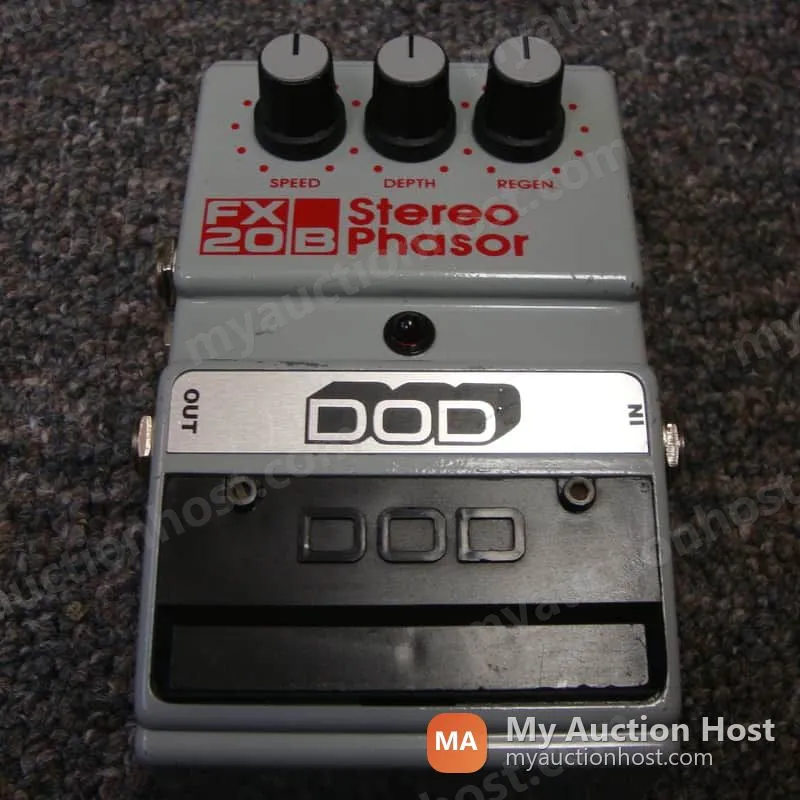
DOD FX20B Stereo Phasor / Phaser
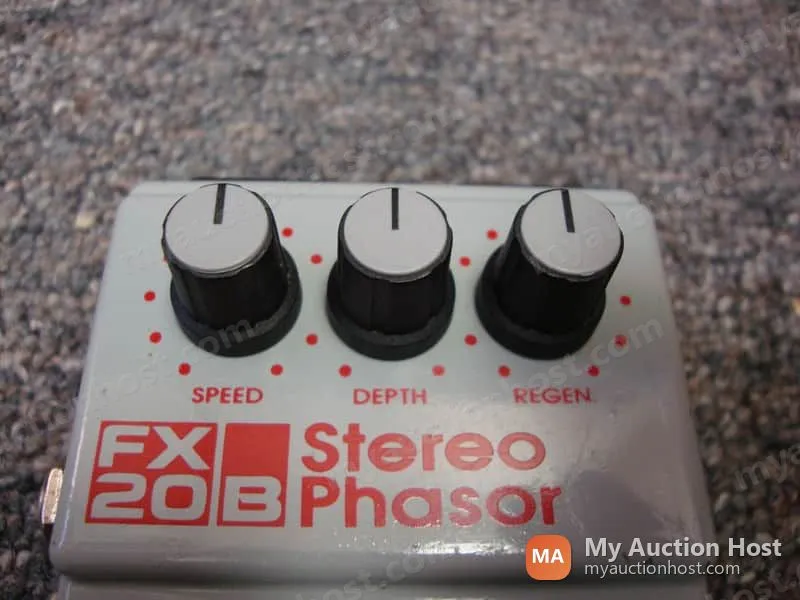
The FX20B succeeded the FX20 in late 1985, adding a Depth control and a second output and moving to a circuit built on three dual OTA chips (first NE5517s, later LM13600Ns). It has six stages of phase shifting, against twelve on the Boss PH-2 Super Phaser that had appeared in 1984. It stayed in production until 1998, when the FX20C replaced it.
The name changed on the front panel. DOD’s early phase shifters used the Mu-Tron spelling “phasor”, and the first FX20Bs said “Stereo Phasor” even though the manual said “phaser”. The label briefly switched to “Phaser” in early 1987, went back to “Phasor” by the end of that year, and stayed “Phaser” from 1989. The grey base coat gave way to gold sparkle in early 1993, around serial number 1300k.
| Introduced | Late 1985 |
|---|---|
| Replaced by | FX20C, 1998 |
| Controls | Speed, Depth, Regen |
| Phase stages | Six |
| Chips | Three dual OTAs (NE5517, later LM13600N) |
Which DOD series is it? A short field guide
DOD Electronics was founded in Salt Lake City in 1974 by John Johnson and David O. DiFrancesco. Its budget FX series appeared in 1982, and from the mid-1980s DOD billed its pedals as “America’s Pedal.” The company was sold to Harman around 1990, and by the end of the century production had moved to China.
America’s Pedal sorts the FX series into three looks, using names it made up itself, and the tells are easy to check on a pedal:
- Original series (1982–88): a “shadowed” DOD logo on the marque plate and a treadle that started as foam rubber, then carried three screws and a DOD logo, then two screws and the logo.
- Second series (1989–98): an “outlined” DOD logo (switching to an italic one around mid-1992) and a redesigned two-screw treadle with no logo. This is also the period of the 1/8″ center-positive power jack.
- Final series (1996 on): a completely redesigned housing with no marque plate and a screwless treadle with an italic DOD logo, plus a Boss-style adapter jack. In 1998 “Made in U.S.A.” disappeared from the bottom label.
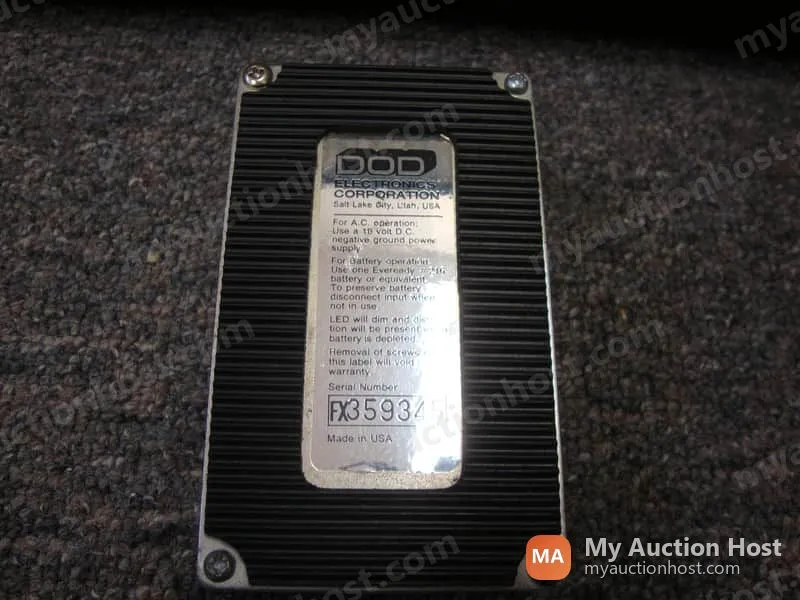
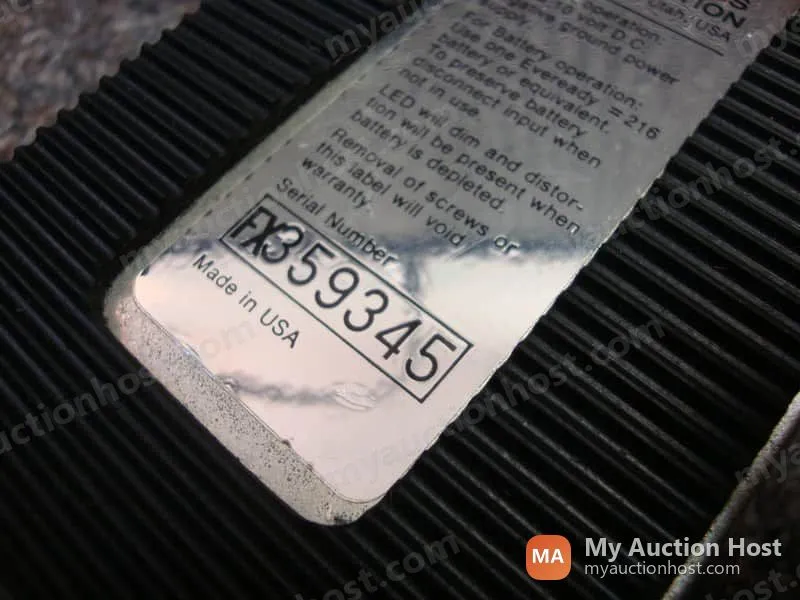
Our DOD FX-series guide has the full model list and more on dating. DOD did not encode a build date in its serial numbers. America’s Pedal estimated dates by comparing serial numbers with the date codes on parts inside more than 160 pedals, and published a chart. The site asked that the chart not be reposted, so here is the archived page instead. Its sister pages cover the field guide and parts and repair notes.
Sources (archived copies in the Wayback Machine):
- America’s Pedal: FX20B Stereo Phasor / Stereo Phaser (archived copy, 2010)
- America’s Pedal: America’s pedal? (archived copy, 2010)
- America’s Pedal: Field guide to FX-series DOD pedals (archived copy, 2010)
The seller’s write-up
The original listing text, lightly cleaned up: serial numbers are masked and pickup and contact details are left out.
This is a FX20B 6-stage analog phaser ("phasor" in 80s DOD parlance) pedal in good to very good cosmetic condition and great working condition. Currently I have another FX20B in my collection and in comparison, this unit for sale performs identically. Sounds great! Google "subdecay fx20b" to read a cool nostalgia piece on this pedal. I agree that none that I have tried sound or behave quite like this model. Doesn't sound like a Boss PH-2 or a MXR Phase 90 to be sure.
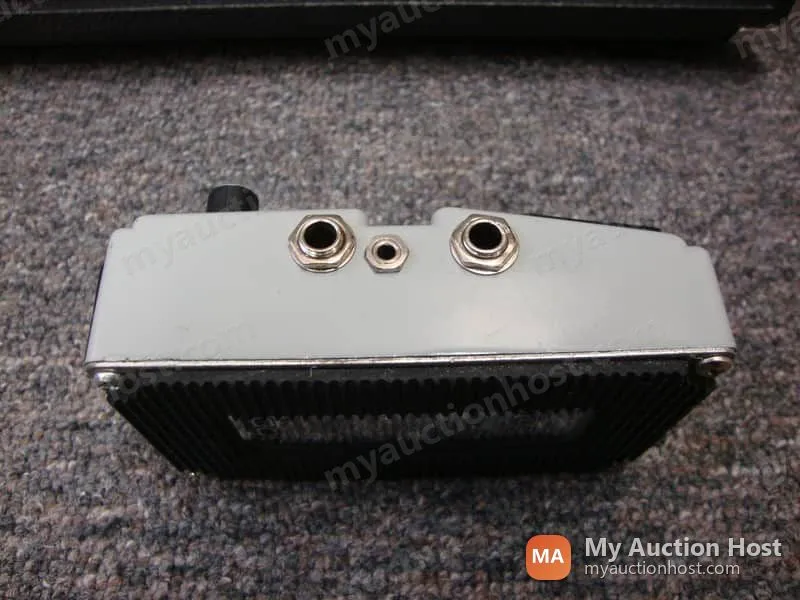
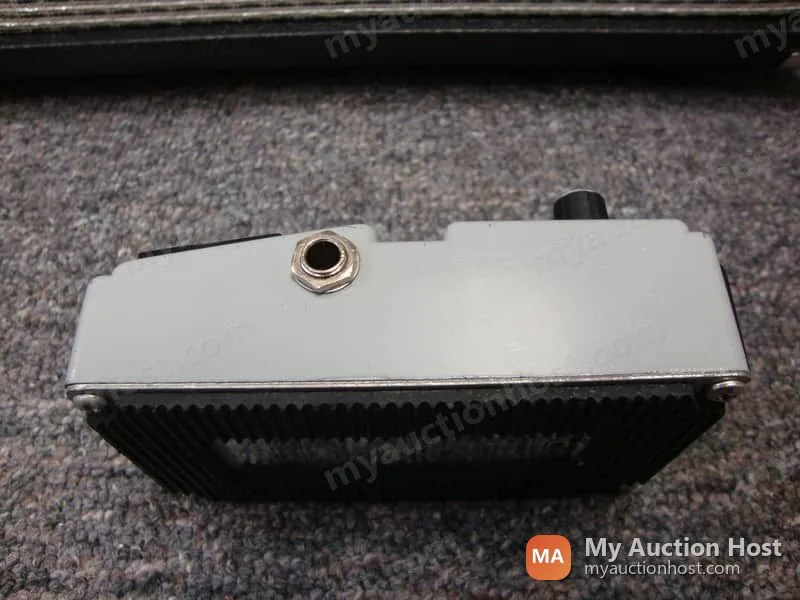
In the interest of full disclosure, please note that both output jacks feel like they have a somewhat loose tension when holding the plugs in place. This does not impact the functionality of the pedal or sound in any way that I can tell, and in fact both jacks make a positive connection (i.e. the plugs "connect" and stay put) and IMHO work just fine. Just wanted that mentioned here. Because of the identical feel on both jacks, I am almost inclined to think it is a function of the jacks themselves and not a defect caused by use. (Most folks play the primary "out" jack in mono and it's the one that gets the wear and tear.) Please note that this pedal is over 30 years old and is being sold as-is.
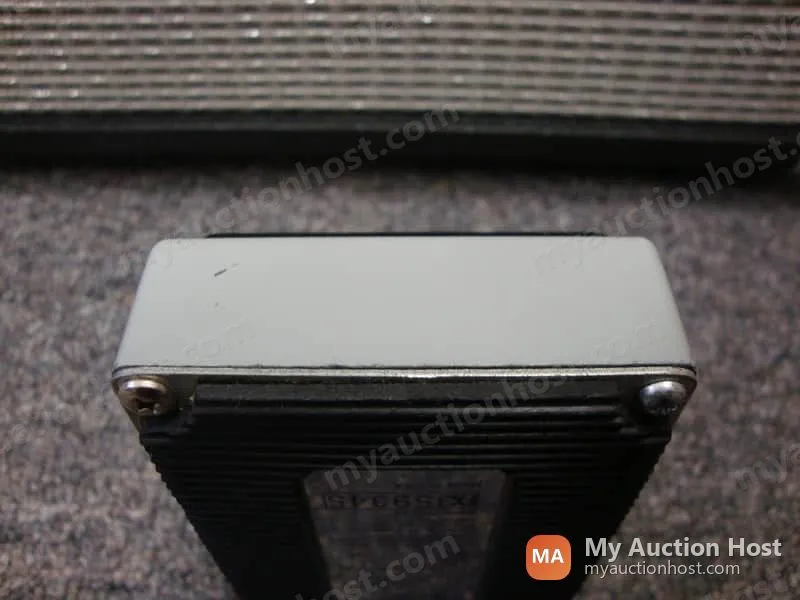
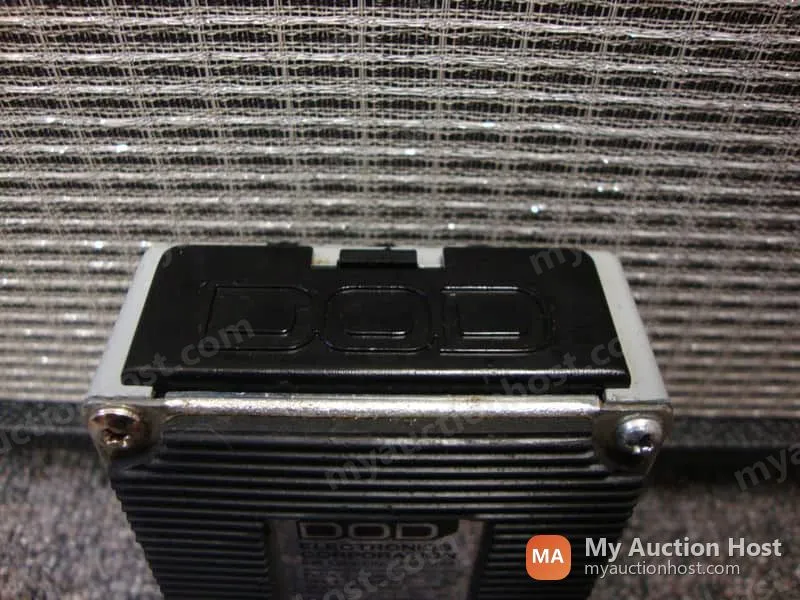
Earlier "gray" cosmetics. Stereo works, battery power works. Has battery door! No box or manual.
I (informally) collect and admire vintage DOD pedals and have several duplicates of several different models. I am trying to let some of them go recently as I don't have as much time as I'd like for music these days. Thanks for looking!
$6 USPS Priority shipping, usually same or next business day, bubble-wrapped in a padded mailer.